


Hello, and welcome back. Jessie here, back from a classic summer weekend in Toronto. Two shows (Broken Social Scene and Loon Choir), two baseball games and tennis made for a busy time on my feet!
This week: Affiliate SEO! With a June Prime Day in the 2026 calendar, we review our best practices and what you need to consider.
Happening soon: We are thrilled to invite you to a special live conversation in partnership with Marfeel. The discussion will focus on AI in search and what to do about it. Join us June 22 at 11 a.m. ET.

Let’s get it.
THE 101
What is affiliate SEO?
Affiliate SEO is the process of optimizing stories that use referrals to sell products or services, where the publisher makes a commission off the purchase. The goal is for users to click an affiliate link and buy a product.
When sites like Wired, Wirecutter and The Strategist review and recommend a product or service, they can earn a commission from the retailer on sales made through their coverage.
Affiliate pages can be in many formats, including standalone product reviews, roundups, sales and deals, or stories around the tentpole shopping event. Supporting content like guides or series can also round out coverage.
Affiliate SEO focuses on finding readers primed to make a purchase. The search intent is commercial or transactional, not informational like traditional news SEO. Keywords like “ipad vs ipad air” are commercial in nature: they’re very high intent with people considering making a purchase.
Does affiliate content (and SEO) still matter?
Yes — for some publishers. Affiliate content offers a secondary source of revenue for publishers, separate from advertising and subscriptions. Done well, it can also expand the E.E.A.T of a publisher, as reviews and recommendations are an opportunity to demonstrate topic authority within your niche.
However, following Google’s 2024 crackdown, many affiliate businesses saw a dramatic decline in search visibility and revenue. Sistrix estimated that the lost traffic was cumulatively worth at least USD $7.5 million.
The rise of AI chatbots means there are more ways than ever for users to find the best deals.
AI Overviews are visible for many commercial and transactional keywords. For example, the term “best air fryer” returns an AIO highlighting the best model — without a direct affiliate link for any publisher.
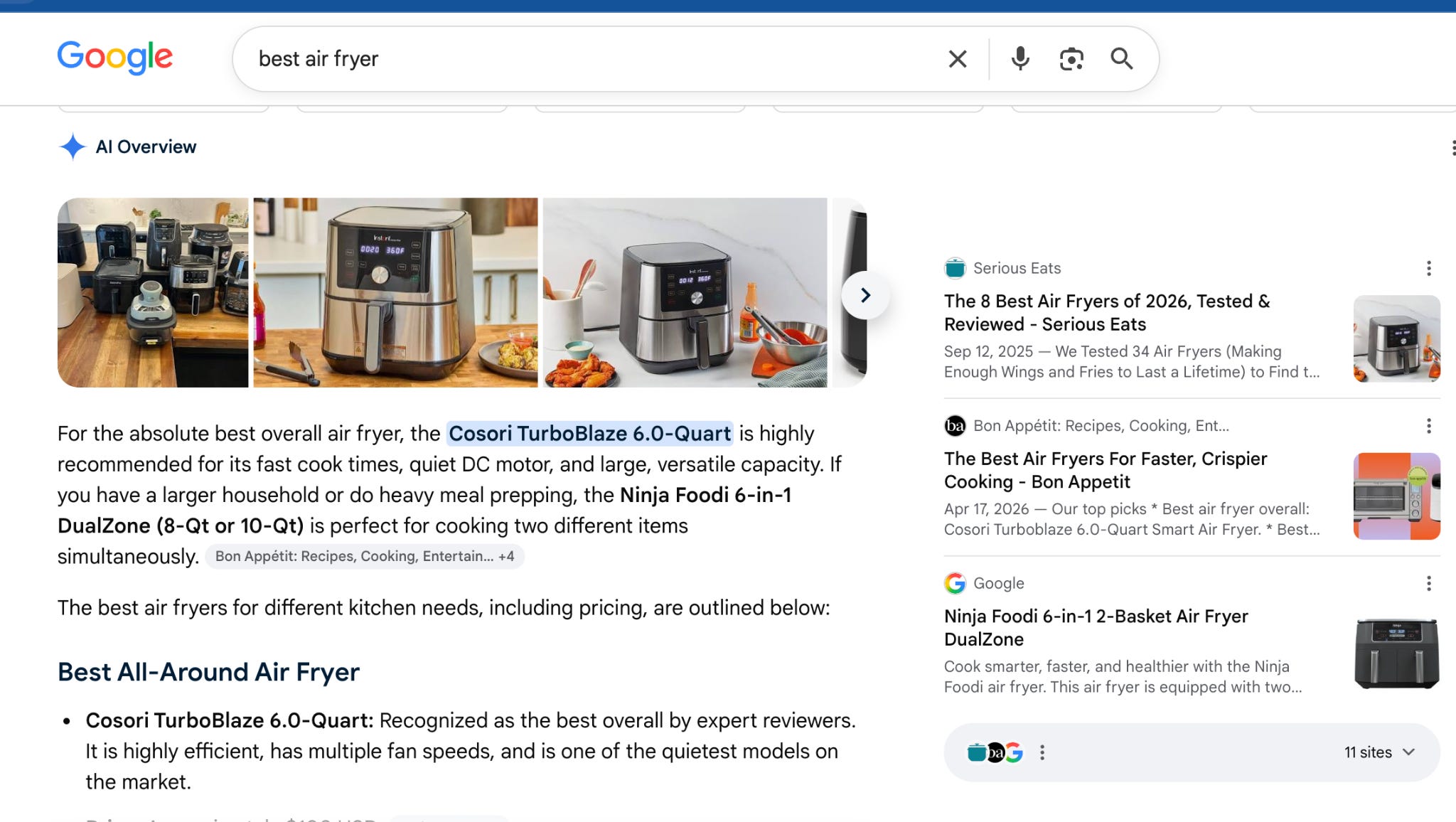
This means there are fewer opportunities for affiliate publishers. Less Google traffic often results in less affiliate revenue. Evaluate the cost-benefit of affiliate marketing and SEO when considering whether optimizing for Prime Day is worth the investment.
HOW TO
8 tips to win on Prime Day
A major tentpole shopping event like Prime Day is not the time to spin up an affiliate vertical. As is the case for all planned news events, prep work should have started months ago. If you didn’t have an affiliate vertical last month, don’t create one just for Prime Day.
To drive conversion from your site’s reviews or recommendations, readers need to trust you — and Google too. E.E.A.T is a major component of affiliate SEO — but it takes time to build (more on this below). Focus on demonstrating expertise and experience in your coverage.
Here are some last-minute tips and suggestions for making the most of the Prime Day opportunity.
1. Think about E.E.A.T — it’s doubly important for YMYL
E.E.A.T is crucial for affiliate sites. Earning the trust of a reader is an essential step. Google’s ever-increasing emphasis on topic authority, especially for YMYL (your money, your life) content, it’s crucial to offer comprehensive reviews and roundups with first-hand experience.
Affiliate content needs to be impartial, and include both positive and negative aspects of the products or services. Provide a thorough, unique and first-hand perspective, offering users something a Reddit thread or AI summary can’t.
2. Conduct keyword research
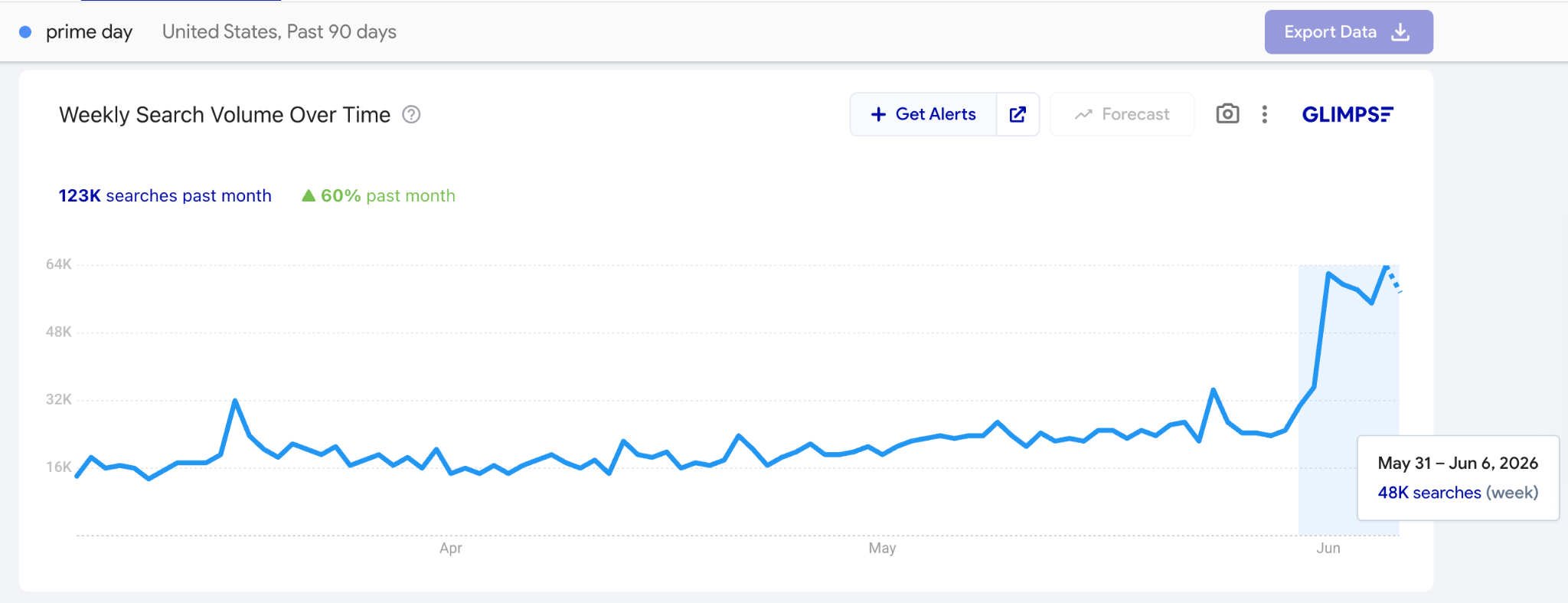
Interest in Prime Day has picked up in the last 90 days, and will continue to grow ahead of the event kicking off on June 23.
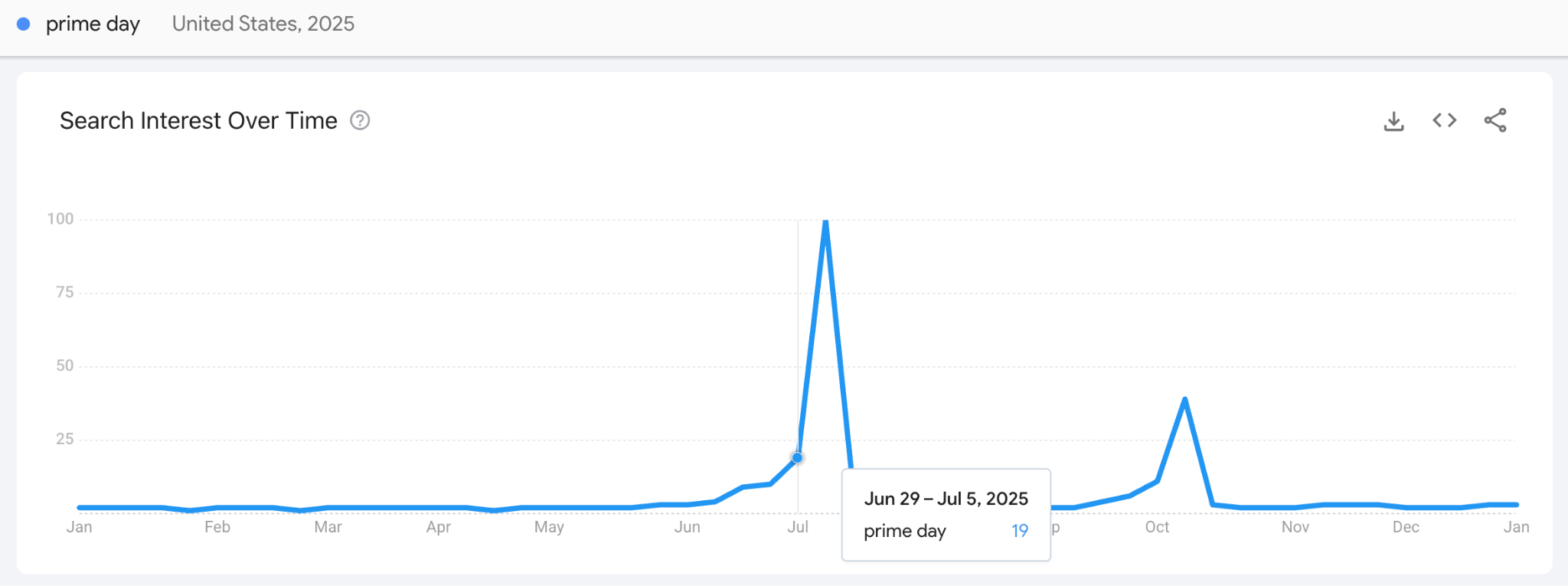
Look at the historical data for Google Trends (using the five-year view) to determine when to ramp up your coverage. According to Google Trends, the peak of interest for last year’s Prime Day was between July 6-12 — about 10 days before the official event.
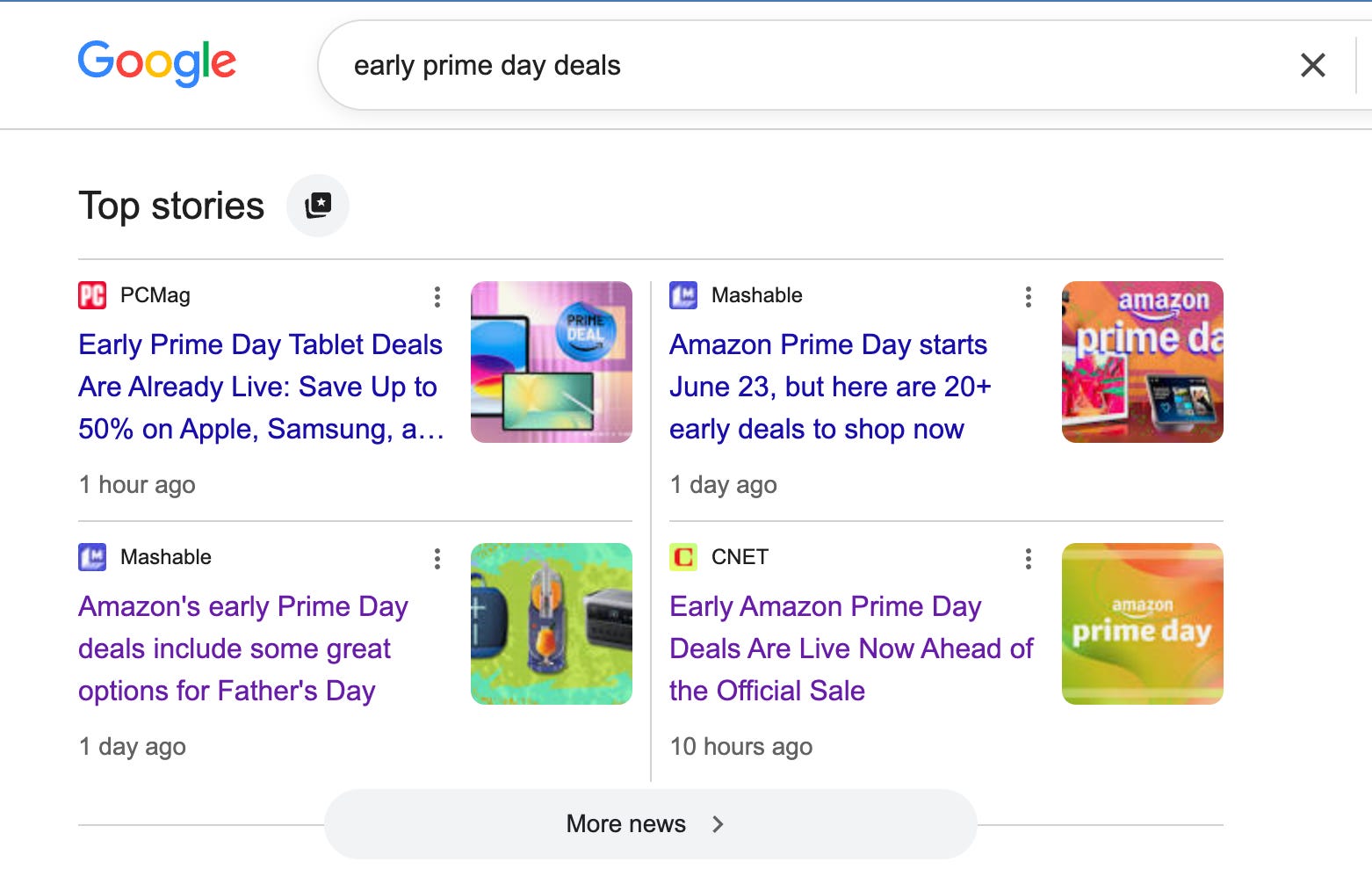
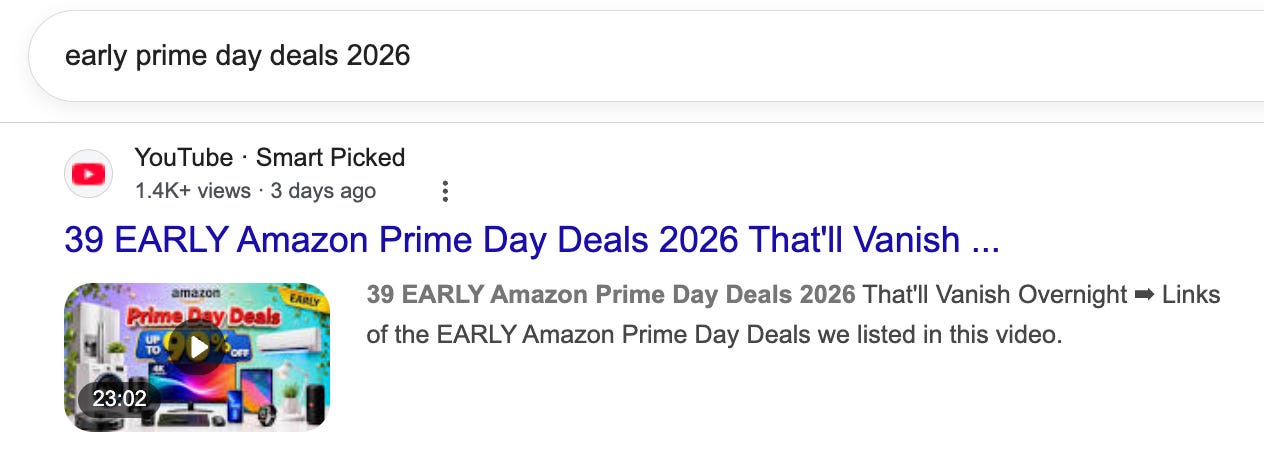
Already, some sites have published roundups of the best early deals, well ahead of the event itself.
Use Google Trends (with Glimpse) and any other SEO tool, and track the “prime day” keyword or topic.
Use this for daily keyword research ahead of the event. As deals are announced and interest ramps up, use the “past hour” filter to get more granular data; keep this open in a tab, and refresh regularly.
Keep an eye on the rising related queries, too, using that information for breakout stories and to update the on-page SEO for your pages (i.e., refreshing headlines, meta description, subheadings and potentially body copy).
For example, in the “Rising” queries section in early June, there’s some early brand-specific interest (i.e., “asics amazon prime day sale”) and product-specific interest (i.e., “early prime day desktop deals’).
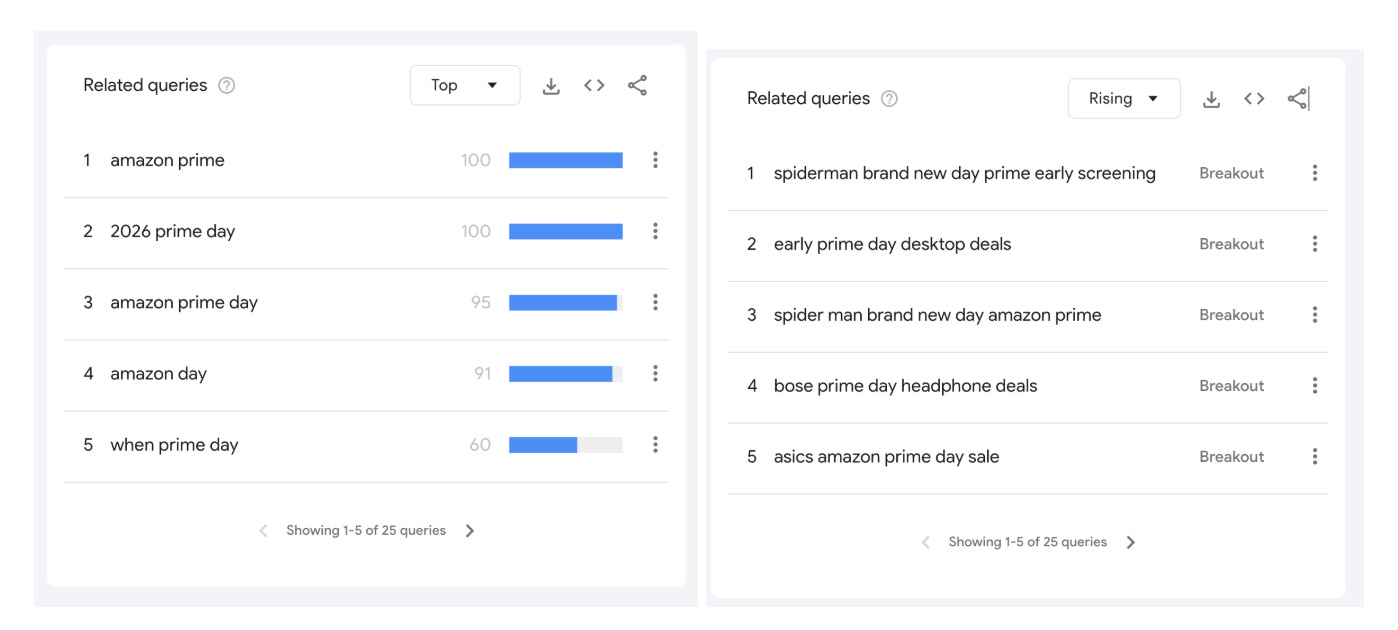
If relevant to your niche, this could inform what product categories to publish early and update often.
3. Divide keyword research into branded and non-branded buckets
Create two buckets for Prime Day keyword research: non-Prime Day branded keywords and keywords with Prime Day. Here, “branded” means specific brands that come up in relation to the coverage (e.g. “sony headphone deals” versus “best Prime Day deals”).
This helps reach people looking up event-, product- and brand-related sales.
It also helps determine where to put your attention. If a specific brand or product has rising interest, prioritize your resources behind content on that topic.
4. Create, promote and utilize your Prime Day tag/hub page
Tag pages help organize your journalism around a topic or event. For example, “Prime Day,” and “Audio Gear” are both hubs that centralize related content.
Make it easy for readers (and Google) to find this content. If you don’t already have a Prime Day tag or hub, create it. Write a clearly optimized title and meta descriptions, along with a straightforward URL for the page.
Link the tag from your homepage, either in the navigation or somewhere highly visible. This helps Google consistently crawl your content quickly during the event, and ensure readers can easily find your best reporting.
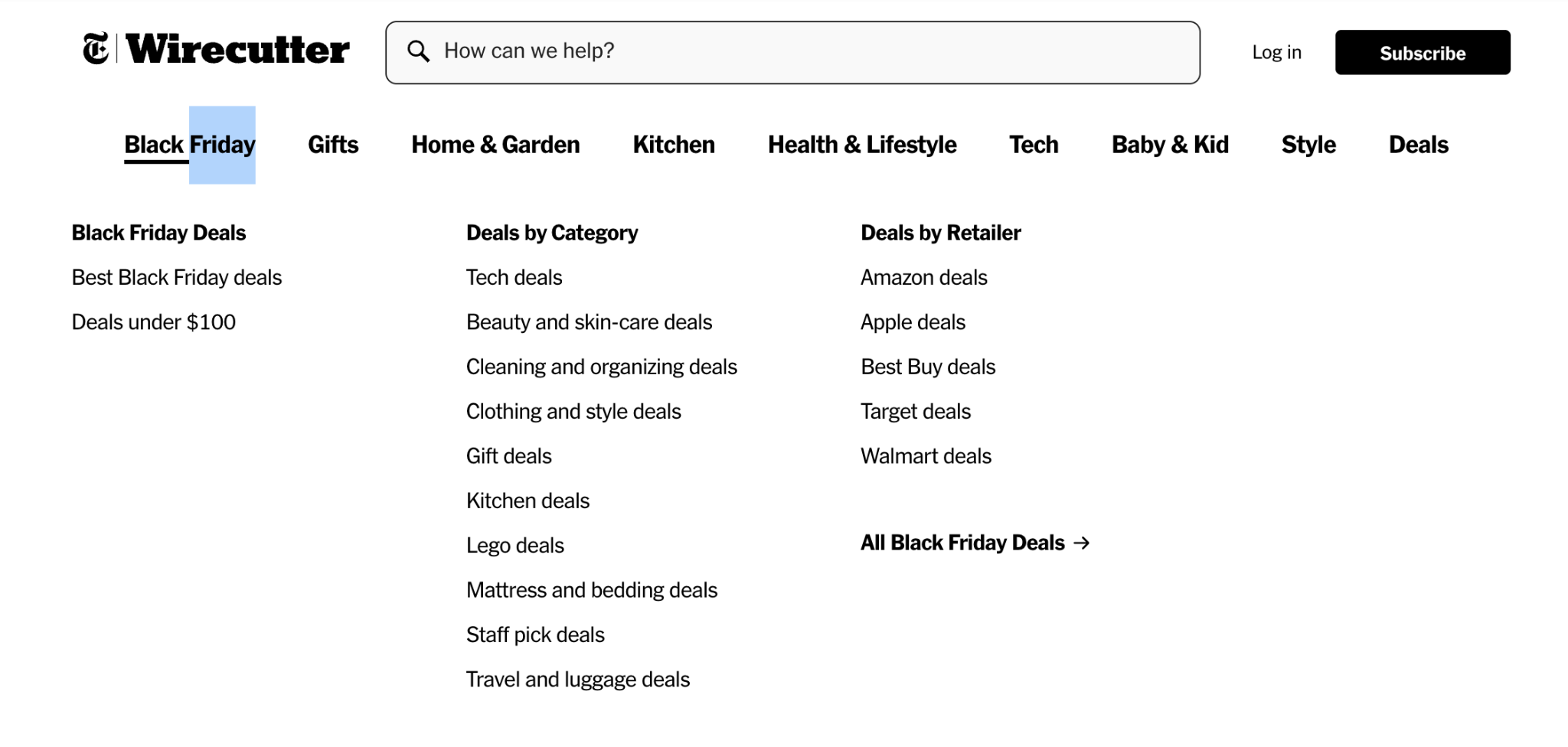
During the 2025 Black Friday, Wirecutter’s navigation featured the Black Friday tag page. The fly-out navigation linked to several distinct pillars of coverage: best overall deals, deals at a specific price point and deals by category or retailer.
5. Execute effective internal linking
Internal links are essential for good SEO. Links and clicks are still how Google interprets the importance of a page, so linking related coverage together is crucial.
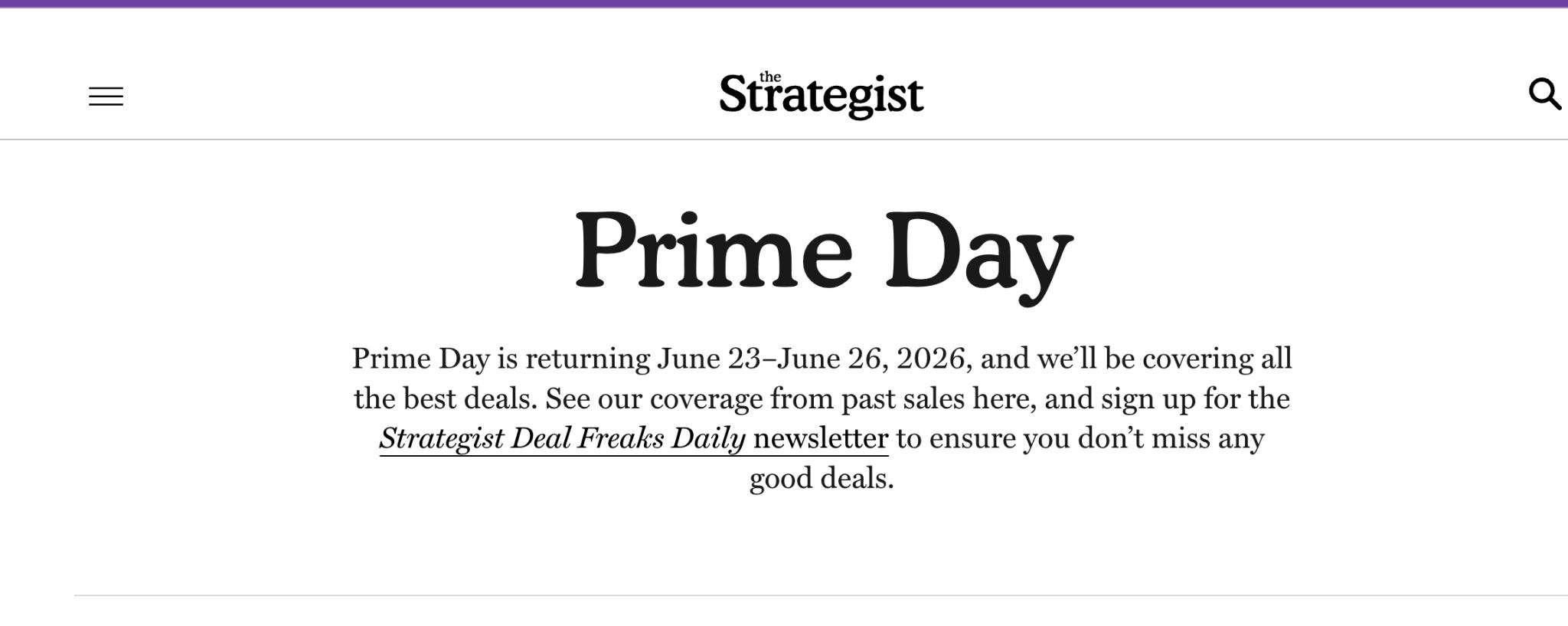
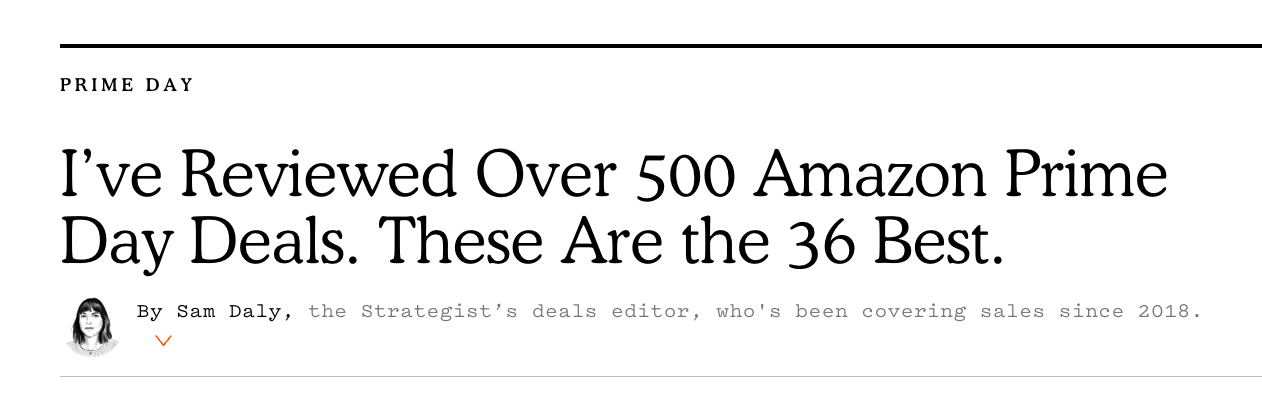
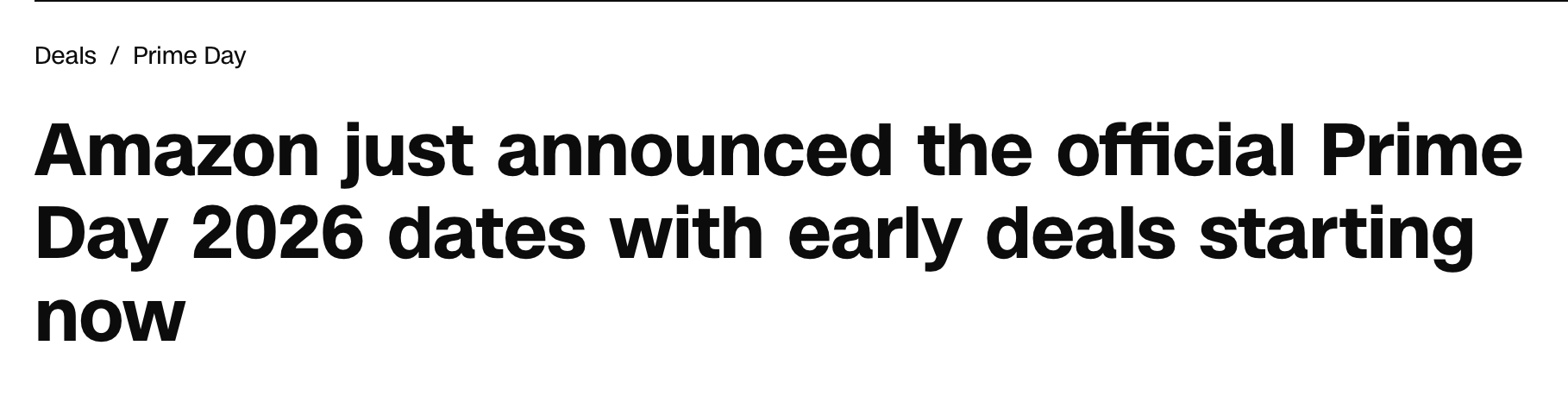
Link to the tag page in all stories and ensure all stories are linked from the tag page. In the examples below, The Strategist and CNN have their Prime Day tags linked as a breadcrumb above the headline.
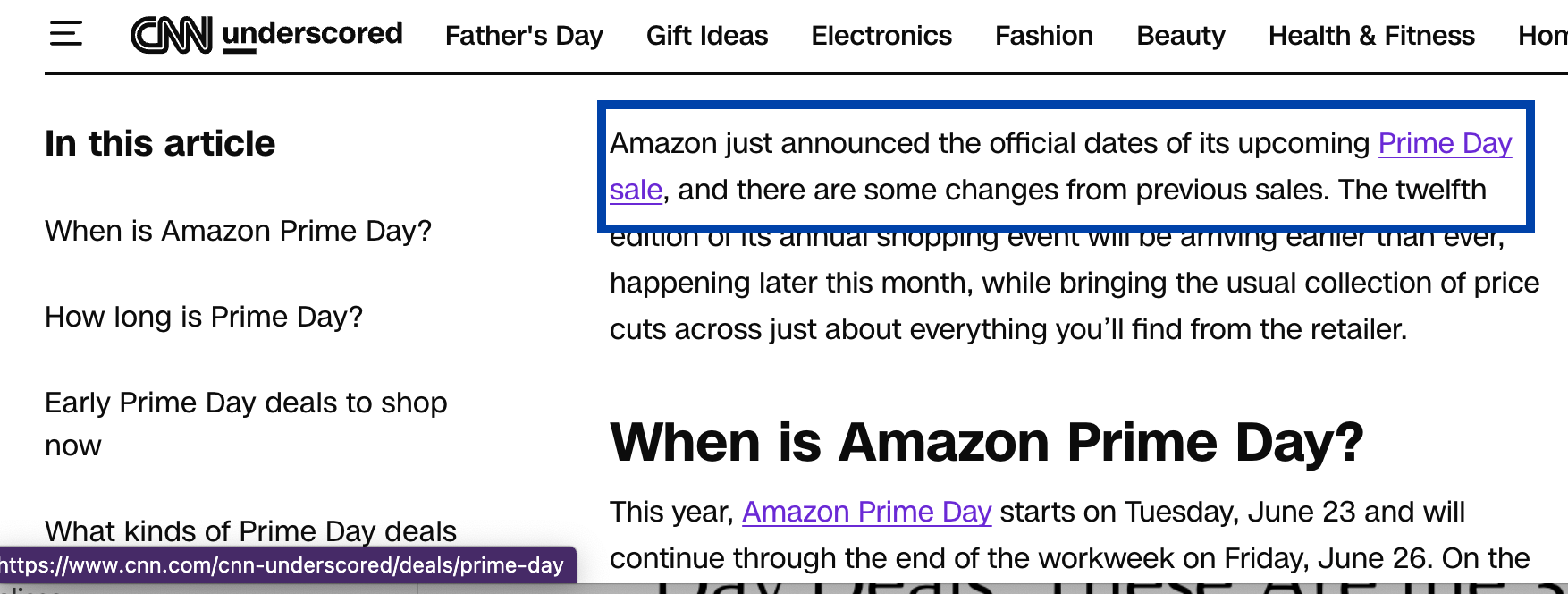
In the body copy, CNN also links to its Prime Day tag page on first reference of the keyword.
Readers should be able to navigate between related content easily. Link similar pages like your best Apple, best Sony and best Amazon audio gear deals together.
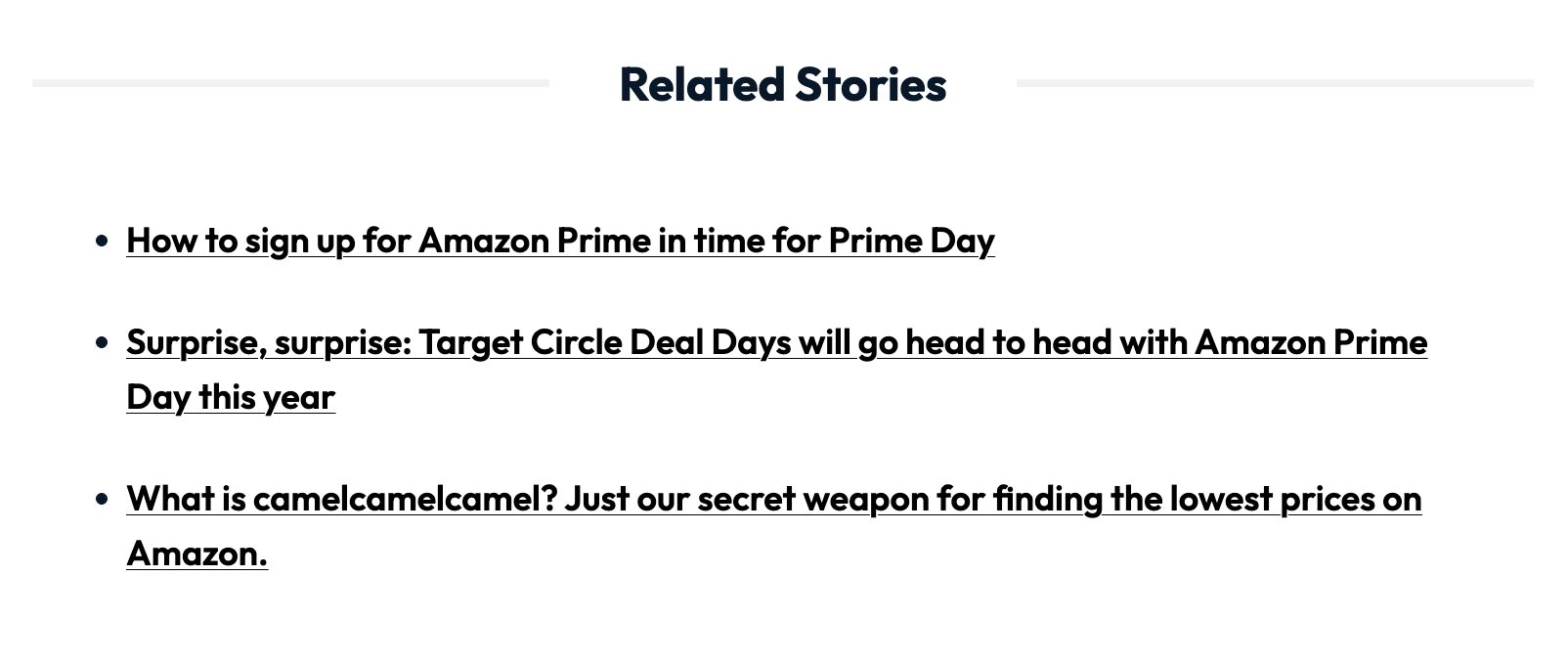
If possible, add an in-article “Related Stories” module to link out to additional reporting. This demonstrates the breadth of your coverage to Google, and keeps readers on your site longer.
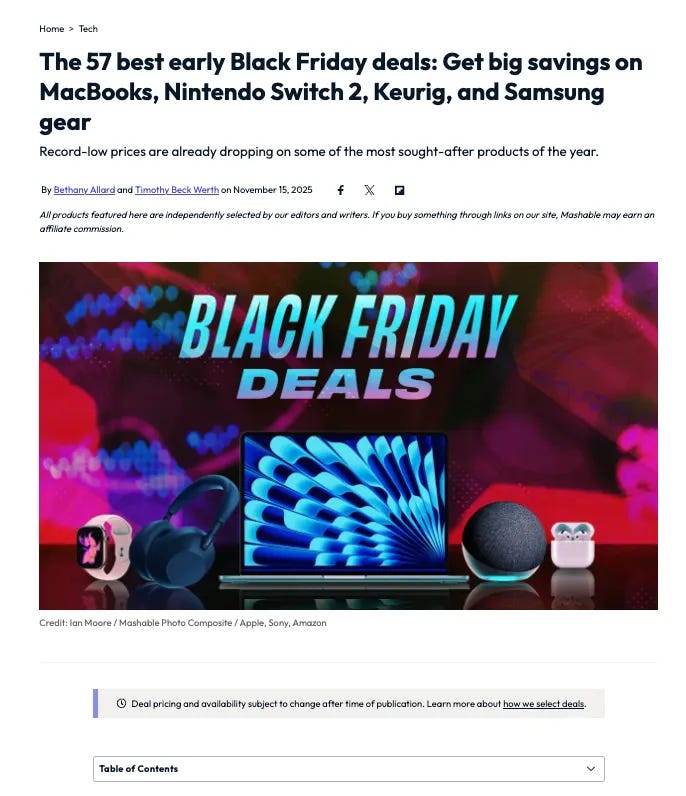
Consider creating a “mega post” to house every single Prime Day page. Add a table of contents to provide structure and make it easy to navigate.
Mashable’s “mega post” page from Black Friday is a great example.
6. Monitor product changes like discounts and inventory
This is the news of the event. In your content, be sure to highlight deals, discounts and when prices change. Communicate when products go out of stock in your content, too.
Being on top of these changes makes your content more valuable to readers and demonstrates your expertise. It’s something readers appreciate. The updates to pages also signal the freshness of your content to Google — Prime Day is still a live event.
As such, a live blog can be a helpful tool to track and report on these product changes. Or, consider using your newsletter to tell people about the best deals.
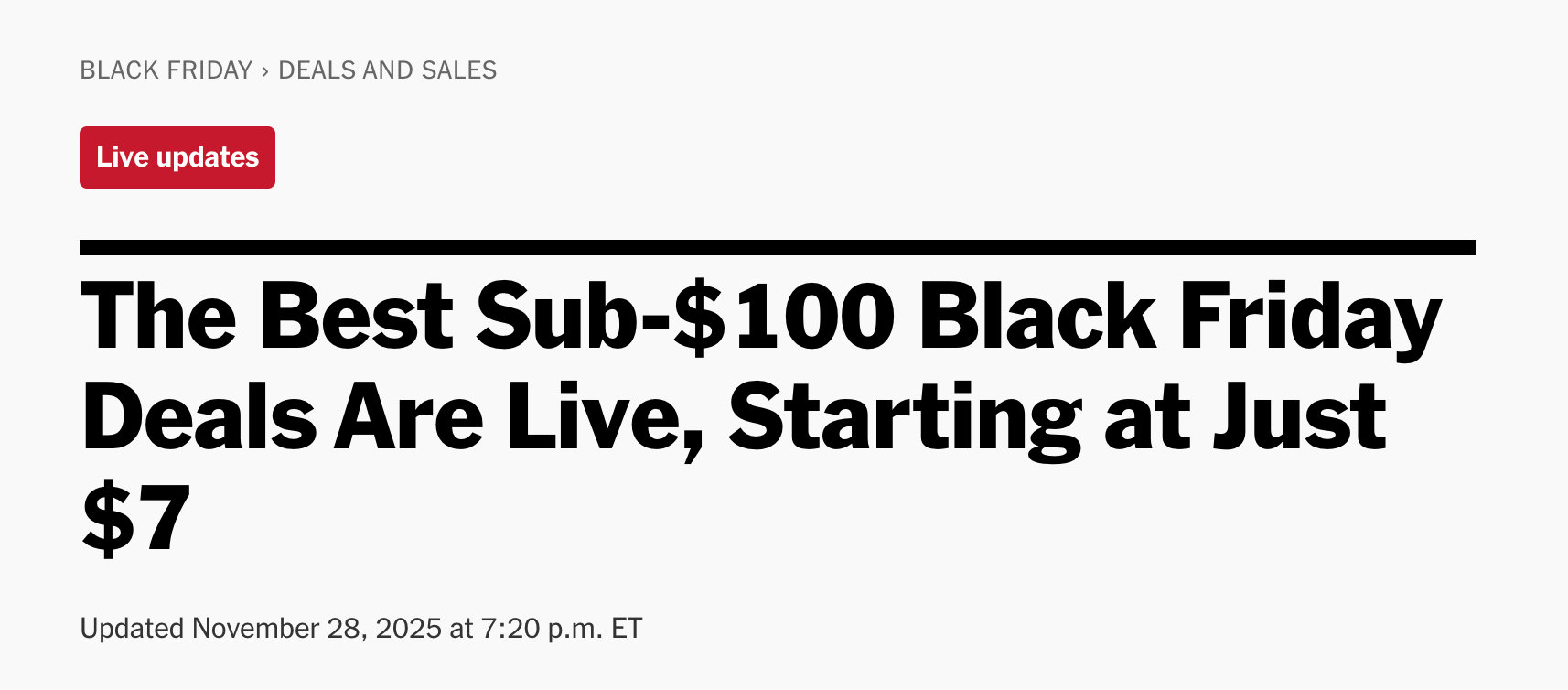
In the example below, Wirecutter utilized a live blog during Black Friday to provide readers real-time alerts to new deals.
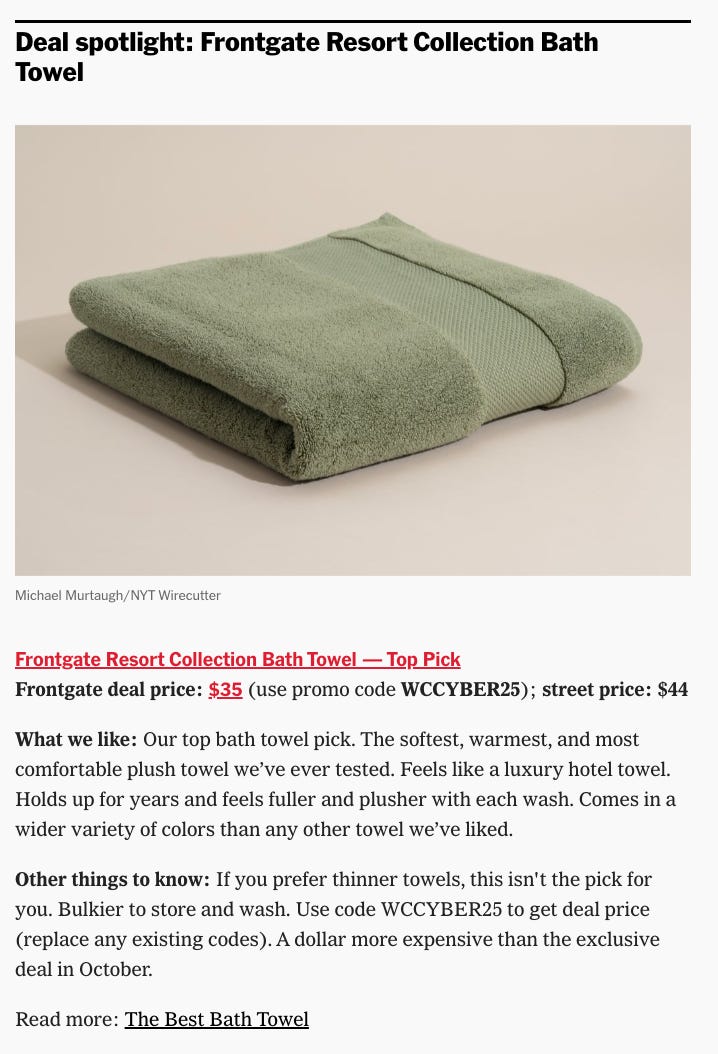
The blog format allowed Wirecutter to spotlight deals (with affiliate links), while also linking back to their existing ‘Best of’ reporting.
7. Take a look at multimodal and off-platform opportunities
We are permanently online — and Google Search is no longer the only entry point on the web.
People turn to AI chatbots, social platforms like TikTok and Instagram, along with forums like Reddit for reviews and recommendations. Try posting on these platforms as it expands your visibility.
If you have the resources, experiment. Prime Day is a smaller affiliate event than Black Friday, so it can serve as a playground.
Experiment with audience projects, like a deals-focused WhatsApp group or mini newsletter. Try to post to Reddit or host an AMA with a reporter who is known in the space. Ask reporters to produce short video content for YouTube, TikTok or Instagram. Take notes about what does and doesn’t work — and apply those learning to the marquee, colossal event that is Black Friday.
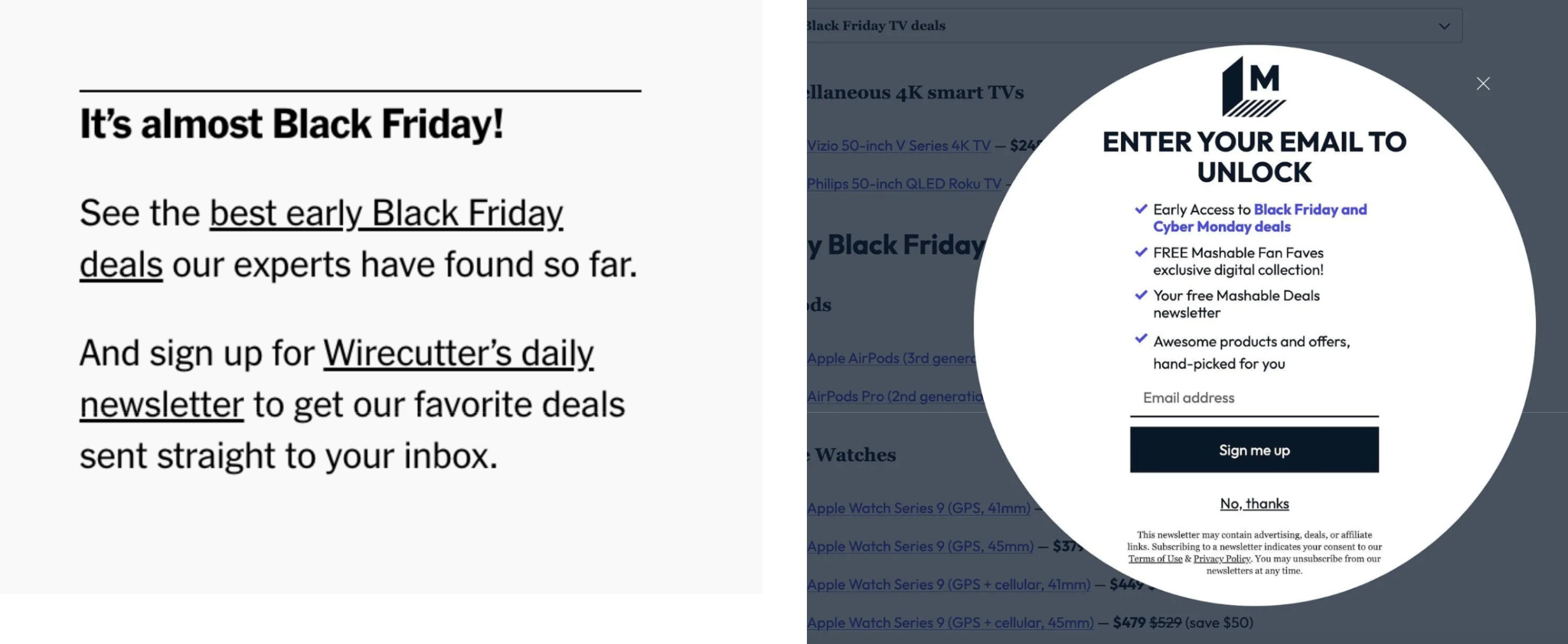
Many sites like Mashable and Wirecutter prominently linked to newsletters to surface information about Black Friday to their readers.
8. Consider where AI can help your workflow
As publishers find innovative ways to use AI in their newsrooms, tentpole events are opportunities to see how the technology can work for you.
AI tools can scan sites for deals and ingest it into a Slack message, or even update prices on-page. AI can also help with internal linking when there is a large influx of content like one-off product deal stories.
AI-generated content should always be reviewed by a human for accuracy. AI can get it wrong; it’s important we don’t.
The bottom line: Prime Day is an opportunity for publishers with affiliate verticals to experiment with new formats, build out their E.E.A.T while also driving revenue and reach.
#SPONSORED - The Classifieds

Get your company in front of more than 14,000 writers, editors and digital marketers working in news and publishing. Sponsor the WTF is SEO? newsletter!
THE JOBS LIST
Audience or SEO jobs in journalism. Want to include a position for promotion? Email us.
Mountain State Spotlight is hiring an Audience Manager (West Virginia, USA)
RECOMMENDED READING
Google news and updates
🤖 Google: The May 2026 Core Update finished rolling out.
🤖 Google: Google launches Search profiles to help publishers and creators highlight their work
🤖 Google: New AI Search controls are available in Search Console.
Even more recommended reading
⛔ Matt G. Southern: UK’s Competition and Markets Authority ruled that Google must give publishers more control over how their content is used in AI Search features.
▶️ Steve Paine: Visibility analysis and data updates after the core update.
◀️ Aleyda Solis: Intent, market fit and source types drove the biggest visibility shifts.
👍 Roger Montti: Google’s CEO Sundar Pichai said he is comfortable with AI Mode replacing classic Search.
🤔 Sara Taher: Who does Google trust in AI Overviews?
What did you think of this week’s newsletter?
(Click to leave feedback.)
Catch up: Last week’s newsletter


Have something you’d like us to discuss? Send us a note on Twitter (Jessie or Shelby) or to our email: seoforjournalism@gmail.com.
Written by Jessie Willms and Shelby Blackley