

#SPONSORED
Paywall masterclass with WTF is SEO?
We’re pleased to present the third workshop in our series of WTF is SEO? masterclass calls on paywalls!

Join us on March 4 for a masterclass on paywall SEO for publishers. Jessie Willms and Shelby Blackley (WTF is SEO?), Barry Adams (Polemic Digital), and Harry Clarkson-Bennett (Leadership in SEO) will lead attendees through 2 hours of paywall tactics and strategies.
The first 10 people to register for this masterclass get a FREE tote bag!
In this session, attendees will:
Learn the fundamentals for the technical side of implementing and optimizing a paywall;
Understand how to build a successful commercial strategy for monetizing your site;
Know how to structure, surface and optimize paywalled content to continue to reach search (and other off-platform) audiences.
Attendees also receive lifetime access to the masterclass slides, a tip sheet, a recording of the call along with a transcript, and a private Slack channel with the experts and other students.

Hello, and welcome back. Jessie and Shelby here, back from another snowy weekend in Canada. You’d think that after 50cm, sub-negative temperatures, frozen pipes and sleeping with three blankets, we’d be over this… well, we are. Is it spring yet
🎂 ALSO: Today, February 2, marks exactly five years since we officially started this newsletter. What started as a fever dream — a resource we both desperately wished we had early in our journalism careers — is now a whole community of audience editors across the globe working to better serve their readers. We’ve likely sent more than 2,000 newsletters in those five years, and yet every one gives us the butterflies. Thank you, from the bottom of our hearts, for being here.
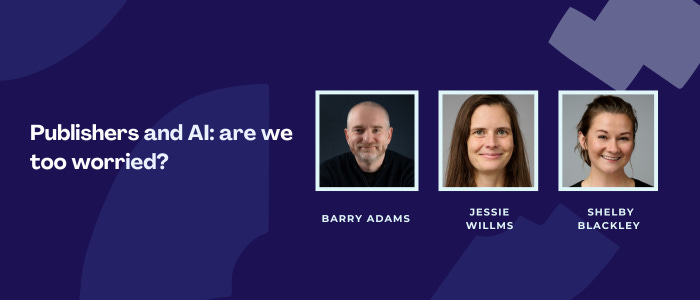
This week: We sat down with Barry Adams, technical news SEO expert and friend of the newsletter, to talk about the current state of news SEO. We discuss what publishers need to consider in this crazy time, as well as the very important question: Are we freaking out too much, or just enough?
🎉 Register now! Our winter 2026 community call will be February 11 at 11:00 a.m. ET, for a session on AI and search. Be sure to ask a question!
Let’s get it.
THE CONVERSATION
The below conversation has been edited for clarity and length.
Shelby Blackley: So, friends, let’s start here: Are publishers freaking out too much, or the right amount about AI right now?
Barry Adams: With some exceptions, I know publishers who are pushing forward quite level-headedly, and those generally are the publishers who have been doing things correctly. The last few years, they’ve been focused on building quality journalism. Good authority signals loyal audiences. They’re not really freaking out. They’re looking at it with like, one eye, one eyebrow raised, saying, “Google, this isn’t nice,” but they’re not suffering from existential dread or anything like that.
Whereas publishers who’ve had bad habits over the years — and let’s be honest, there’s quite a few of those — are concerned. And rightfully so, because no matter how much people have been saying, “don’t do clickbait. Don’t write just for clicks. Don’t chase after the algorithm,” publishers have been still doing that because it kept working.
And now, AI is really putting the final nails in its coffin. You don’t write for clicks anymore. With the exception of Google Discover — that’s an entirely different kind of door I’m not going to open right now — the era of clickbait is well and truly dead.
Publishers that are only now making the shift to actually doing brand authority focused journalism are going to have a hard time. There’s a lot of catching up to do.
So, I understand the panic from that point of view. But, if it took for this for you to change course, you haven’t been paying attention the last few years, and probably since 2018 really, when the trend first started emerging. Google was narrowing the space for news in search results then.
So, yeah, they are freaking out too much. But, some of the freakout is justified, but it’s also a little bit too late.
Shelby Blackley: A lot of the publishers that I’ve been speaking to — or even just people that work in news — have been noticing for years those outlets that encroached on their spaces just to get clicks. Writing spammy content that’s not necessarily in their wheelhouse. There are sports publications that were writing, “what time is the Oscars?” and doing really well. Now, they’re being knocked out, or they’re experiencing spam alerts and manual actions.
It’s interesting to me that some publishers think the answer to AI is that slop — that content that is just answering those questions. And I’m so curious what you think, Barry, about that. Because, yes, I’ve seen some publishers really hunker down on brand authority, but then there’s this selective group of publishers that are still going after the slop.
Barry Adams: I understand why they do that, because it’s sort of like the tactics available if you want to optimize for citations and LLMs. But, I think if you’re a content-driven website that relies on traffic for your monetization, you do not want to optimize for LLMs. The effort you put into that does not yield the reward you get. If you’re lucky, a single-digit percentage of your traffic is from an LLM — usually a fraction of a percent.
You can play some mental gymnastics to justify that — we get brand mentions, brand salience, or visibility high in the funnel. But you’re not selling a fucking product, you’re selling content. So you need people to read that content on your website. Optimizing for LLMs means people will read your content, but not on your website — it will read it in the LLMs. Why the fuck would you want to do that? It makes no sense to me.
If you’re e-commerce, yes, optimize for LLMs. Go for it. Maximize that, because people will start e-commerce journeys by asking a chatbot a question. You need to be in there.
But, if your monetization depends on people visiting your website, optimizing for LLMs is probably the stupidest thing you could possibly do. There are way better uses of your resources and efforts than trying to chase after the LLM algorithms, which — by the way — are painfully simplistic and very spam prone. If you think the answer to your woes is creating more spam, guess what? You’re going to have a very bad time.
Jessie Willms: That’s such a great I wish we did Shorts, because that quote would have been a perfect Short.
I wanted to ask you, Barry, because I think that in some newsrooms, there are higher-ups and senior managers that are making decisions about strategy, and then there are the people who are actually responsible for implementing that strategy.
If you are an audience or SEO editor and one of your core tasks is to find trending stories to write up – at the expense of putting in the time on bigger, longer term investments – how do you make the editorial case to focus on the longer term strategy? How do you steer the ship towards topic authority building, demonstrating E.E.A.T and all those things.
Second to that, if you do have to keep doing quick hits for traffic, is there a way to make that work towards longer-term efforts?
Barry Adams: I’ll tackle the first question. I do sympathize with SEO editors and journalists who are caught in that dilemma, where they know they’re doing something that doesn’t benefit their employer in the long term, but there is a very immediate, short-term requirement for it. I say, you gotta just do what the boss asks you to, because you know, we live in a capitalist society, but be sure to document it. And push back a little bit and ask, “what KPIs am I being judged against here and and who is responsible for actually fulfilling those KPIs?” Because it shouldn’t be you, or you shouldn’t be forced to write spam for clicks.
We have to play a different kind of Google game by different rules. We can’t just go down the spam route. Try to point at the data and point at the numbers [for meaningful content]. Make sure it’s meaningful data, not just numbers pulled from thin air, like, “we got mentioned in ChatGPT 17 times for this prompt.” A meaningful number that will help reach the business goals.This helps create clarity.
And you don’t need to be a manager for that. You can just ask your manager, “what are the KPIs, both short- term and long-term?” And if it’s a KPI you don’t agree with, you need to make sure that it’s in writing as well. You will still do your damndest to fulfill that KPI, but now it’s documented. Leaders don’t necessarily have the answers for it, but at least it makes them think about it a bit more, rather than just hop on a panic bandwagon and say, “we need to do this.”
Now, if you do write that content, and you’re trying to satisfy the case and build E.E.A.T signals, that’s quite hard to do. But you have to sort of justify it for yourself. Cite sources. Link out to sources, reputable ones. Try to use phrasings that sit in that curiosity gap middle, but aren’t quite clickbait. You can actually achieve quite a lot with headlines that aren’t overtly spam, especially if you combine them with really good images that people won’t scroll past and be enticed to click on.
The article itself doesn’t have to be spam. You can still get the click if you have a good headline and a good image to go with it, and the article itself can actually be high quality. Also, don’t be afraid to put your name on it. The authorship part of E.E.A.T plays a role, and you might feel a little bit of shame of writing this content, but at the same time, if it’s a very high performing article for your publisher, you will be very happy your name is on it.
Work within the constraints that you’re given, and inject as much quality, originality and authority in the article as you can, while still fulfilling the needs that your senior manager places on you.
Shelby Blackley: I want to come back really quick to the first part that you said, which was a great point. It’s something happening with us [at The Athletic] and a lot of other publications. We’re having these internal conversations of, “how does AI fit into our workflows, or how does AI fit into our world?” And there have been these questions from leadership of how that looks, and we’ve been having, I guess, more frank conversations and pushing back if it doesn’t make sense. We want to make it useful, not just “we use AI for the sake of AI.”
One of the things that some of my reports have been doing is having frank conversations with me, asking those exact questions. “What is the point of this? What are the KPIs the company is looking at? How does The Athletic envision this?”
I think that’s really important to have those conversations even with your managers, but I think that’s something that a lot of publishers are struggling with right now. We do this a lot — and I always come back to this example of 2017 Facebook Live and the tablet era. We’re always in an arms race for the big next thing.
We always want to be the publisher that gets to it first, or is experimenting with it first. But it’s also extremely important for publishers to know how it fits into their worlds. And if it doesn’t, that’s okay.
And to your earlier point, keep the status quo on search. Barry, you posted something yesterday that, like, SEO traffic is actually only down 2.5 per cent overall. Like, that’s actually quite small.
Barry Adams: Yeah, news publishers are hit a bit harder. If you look at the industries specifically, news and publishing is down 11 per cent. Interestingly, traffic to media companies — and that includes the likes of CNN, Fox News, the channels that have a TV channel first and foremost news on the website as a secondary product — is up.
We can’t hide from the fact that news is experiencing a traffic decline again. But, I’m hearing things behind the scenes, that there’s quite a few news publishers who don’t see that same downward trend. And again, from what I’m hearing, those tend to be the ones who are doing things the right way and haven’t been chasing after clicks.
I’ve made this point a dozen times and I’ll do it again — there are too many publishers out there who are quite forgettable, quite undifferentiated from their direct competitors. For example, I work with publishers in a specific sports niche — I will not say which one that is — but I have to sometimes check what website I’m on by looking at the logo, because they look so similar, and they do everything the same. Like, okay, which am I looking at? And if you have five of those websites and four of them disappear, nobody would really notice except the people who work for them.
You need to build a bit of a connection on your website so that you will more likely be clicked on. People might even follow you on Google Discover if that feature is available to them. They might go directly to your website and circumvent the intermediary of the search ecosystem. But if you don’t do that, if you don’t have anything unique — and there’s a lot of websites out there in all kinds of different spaces that just don’t have anything that differentiates them — why are you in business in the first place?
You’re not really there to create quality journalism. You’re there to make money, and that’s not the sort of objective Google wants to associate with journalism. Ironically, even though journalism does need to make money, publishers put monetization first and journalism second. That, too, is a theme I’ve seen since 2018. You’ve got to put the cart at the back of the horse and say, we need to start with journalism and then find out how to monetize it.
Jessie Willms: I think there’s a lot to unpack there. There are a lot of sites that seem to be examples of a “just flood the zone with content” strategy.
But, if you’re not in leadership, and you look at the organization that you’re working for and you recognize, “we’re doing a lot of generic content,” I’m wondering, how do you build up a strategy away from generic to distinctive.
Do you look at your Google Search Console data and say, “we are ranking well for these five topics. Let’s build those out as our initial pillars, and then sort of figure out how we strategize a content plan around those five pillars, eventually leading to a monetization strategy.” Or do you take a different tack?
Barry Adams: I take a different tack. Quoting my good friend Andi Jarvis, who is a marketing strategy consultant, his mantra is, “talk to your customers.”
I don’t think publishers talk to their customers. Sometimes, I think many publishers don’t realize who their actual customers are, because they think their advertisers are the customers. They see their readers as their product, and the advertisers as their customers. I understand why. I understand the economics of that strategic perspective. But it’s also entirely wrong and a recipe for colossal disaster.
Your readers are your customers, your readers are your audience, your readers are the most cherished thing you can have as a publisher. You need to talk to your readers. “What do you want from us? What do you like about us? What don’t you like about us? What can we do better?” Have those conversations. They don’t necessarily need to be the guiding principle of your strategy, but it can influence your strategy and serve as a very important data point or multiple data points.
Do it regularly. Check back in. A lot of publishers have this internal perception of what they are to their readers that doesn’t necessarily align with what their readers actually think the publisher is. You’ve got to align with that a little bit better and use that as the first touch point.
Then, you look at Search Console. What kind of topics are doing well? You can look at Discover data as well, and what kind of headlines really work well. But that’s more of a tactical thing. That’s not a strategic thing. That’s more about maximizing tactics on a strategic level. You need to understand what you want to be and what you currently are, and how to get there. And I don’t think you can do that in the right way if you don’t talk to your readers — the actual consumers of your content.
Jessie Willms: How you make a real business out of journalism is definitely a trend that we’ve seen in 2025 and looking ahead to 2026. Let’s talk about what we think is going to happen in this space for the year ahead.
Shelby Blackley: Especially working for a sports publication, this is a really big year for me. There’s still a lot of opportunity in search, especially publications that are going to be in these big events [the Olympics and World Cup]. These are not only sports events — but they’re international events that are going to literally affect the entire world. With geopolitical news, there’s a lot of things that are at play that not only affects sports publications, but almost every other publication.
So in my opinion, I think there’s a lot of opportunity for publications to get back to what they’re really well known for. Cover these moments in a way that is live, on-the-ground, detailed coverage. With the move to higher content production, publications are writing with their bums in their seats versus being in front of the action. There are also a lot of live events that could really benefit publications if they can get in front of it beyond just the game — covering the scenes in a live blog, including the impact, covering what’s happening with these athletes, especially because these Olympics are so geographically weird too.
There’s just so much more at play. It’s a really exciting year for publishers if they’re not afraid to take chances. But a lot of news outlets are afraid of taking those chances and potentially seeing a loss, but that’s also how you find something that’s really going to work for you.
Barry Adams: Yes. The one thing that AI can’t duplicate is live coverage. They can summarize it after the fact, but they can’t do it live on the ground. That is a differentiator — that is unassailable for the human touch.
I also think the AI bubble is going to burst in 2026 rather than later. (Shelby: ME TOO!) I hope that will bring a bit more sanity to the discussions at the upper echelons of publishers and any other business out there. AI is powerful, absolutely. But I don’t think it’s the world-changing paradigm that the Silicon Valley tech bros have been saying it is. It’s a really interesting tool, but it’s not going to make humans redundant on any meaningful scale.
I also think we’re going to see a few fairly decent publishing brands disappear — maybe get bought over, merge with other companies or just go out of business entirely. That’s inevitable, however, in the long run, I think it’s probably good for publishing. There have been too many websites coasting in the margins without really adding anything of value. Some are formerly powerful publishing brands, but they lost focus, or made strategic decisions in the last few decades that have put them in a position of high vulnerability.
So yeah, we’re going to see some brands disappear. I don’t think we’ll see a lot of new startups, because it’s bloody difficult to make headway. But, it’s going to be another very eventful year. I always think we overestimate how much will change in a year, and then looking back, sometimes we underestimate how much has actually changed in a year. I don’t want to make too many radical predictions, but it’s going to be another wild ride, that’s for sure.
Jessie Willms: It’s definitely a year with a lot of fear and anxiety in publishing. But, as long as publishers focus on the core things that they’re good at that can’t be replicated, they’ll be okay. The ones who are doing really solid journalism and have a clear head on their shoulders about their expectations for traffic and revenue opportunities, and who their readers are, will be the ones that succeed.
#SPONSORED - The Classifieds

Get your company in front of more than 13,500 writers, editors and digital marketers working in news and publishing. Sponsor the WTF is SEO? newsletter!
THE JOBS LIST
Audience or SEO jobs in journalism. Want to include a position for promotion? Email us.
NBC4 & Telemundo 52 Los Angeles is hiring an Digital Content Producer (Los Angeles, U.S.).
RECOMMENDED READING
Google news and updates
🤖 Google: Our approach to website controls for Search AI features.
🤖 Google: AI Overviews now reach over 1 billion users.
🤖 Google: Personal Intelligence helps you tap into your context from Gmail and Photos to deliver tailored responses in Search.
Even more recommended reading
👥 Matt G. Southern: Google’s AI Overviews is now powered by Gemini 3.
↕️ Dan Taylor: How search visibility compounds in brand-led SEO.
🛝 Hayden Field: There’s a social network for AI agents, and it’s getting weird.
📑 Robert Hart: ChatGPT isn’t the only chatbot pulling answers from Elon Musk’s Grokipedia.
📈 Nicola Agius: 12 proven LLM visibility tactics from the experts.
🕵️ Christopher Mims: How businesses are manipulating ChatGPT results.
What did you think of this week’s newsletter?
(Click to leave feedback.)
Catch up: Last week’s newsletter


Have something you’d like us to discuss? Send us a note on Twitter (Jessie or Shelby) or to our email: seoforjournalism@gmail.com.
Written by Jessie Willms and Shelby Blackley