


Hello, and welcome back. Shelby here, back from a wonderful weekend on Ontario’s west coast in Bayfield. Despite having to endure 3+ hours of traffic both ways, it was worth it for the weather, beach, ice cream, sandwiches, camp fires and friendship. A true Canadian weekend.
This week: What is a LLM? We go back to basics, explaining why LLMs are integral to AI Mode, AI Overviews and all of your favourite (or not-so-favourite) artificial intelligence models. Plus: why publishers should have a rudimentary understanding of how these systems work.

Let’s get it.
BOOK THREE, GET ONE FREE!
Put your brand front & centre in WTF is SEO?
Want to get your product in front of thousands of sharp, growth-minded audience editors, media moguls and executive leaders in publishing?
We’re running an exclusive deal to make your advertising budget work double-time: Buy three title sponsorships in the newsletter and get the fourth completely FREE!
Title sponsorships give you prime newsletter real estate, custom copy tailored to our audience and direct access to an exclusive subscriber list who actually open, read and trust our advice.
Prime inventory like this doesn’t hang around for long. Claim your 4-for-3 sponsorship package today!
Email hello@seoforjournalism.com, subject line: “Book an ad.” Availability starting this August.

THE 101
What is a LLM?
A LLM is a large language model, an artificial intelligence system designed to understand, process and generate text like a human. LLMs are pattern-recognition systems that are trained on the huge volume of information on the internet — articles, websites, the code and all of the context a page provides — and then produces an answer based on patterns from the various sources.
LLMs are prediction models. They recognize patterns, but do not think like a human. A LLM operates by breaking down small pieces of the prompt into “tokens” (words or sub-words) and predicting what the most likely sequence of words should come next. AI generates this text based on the information it has previously ingested. This is why AI models can often hallucinate — answers are based on the probability that a pattern of words is correct.
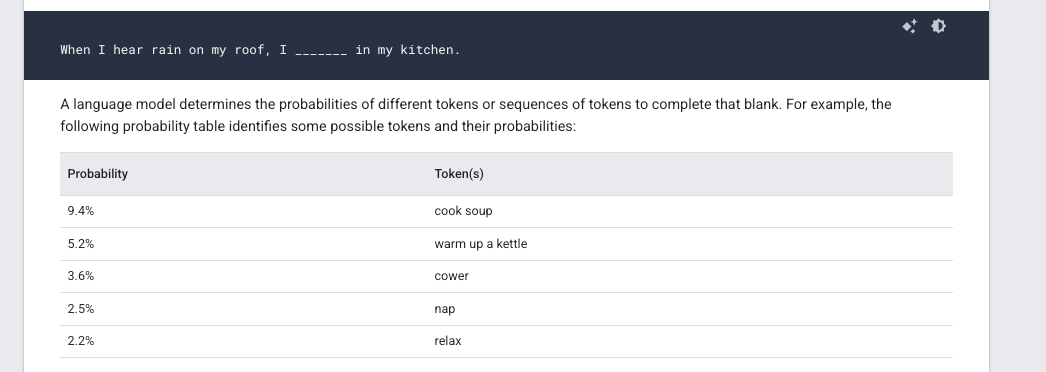
LLMs are AI models, but not all AI models are LLMs. LLMs focus on the generation of text-based answers, and are trained on a generalized set of information. But, other AI models can build upon an LLMs system, and be trained on audio, video, images or even specific niche sets of data.
For example, a general LLM likely can’t create a perfect x-ray scan, but an AI model built and trained on specific medical information and tasks (eventually) could.
The key of a LLM is that it can gather context from multiple sources to better craft a response that fits the user’s needs. This does not mean, however, that it does not hallucinate or get things wrong. Human intervention is still important.
What is a Transformer?
To talk about LLMs, we must talk about Google’s Transformer. Transformers are the way in which language models actually know what task to perform and how to translate (or transform) the prompt into a response.
Google created and patented the Transformer in 2017, making it the most widely used architecture for language model applications.
The Transformer applies a self-attention mechanism, which also ensures the robot models the relationship between the words in the specific sentence, rather than broader context. This is especially important for sentences in journalism, where language is explaining a topic and must be relevant — explaining that there was a stock market crash needs context that it is not, in fact, a physical catastrophe, but rather a decline in investment money.
There are full transformers — which include the encoder (converting the input text into an intermediate response that has all of the information) and the decoder (converts the information into useful text for the reader) — and partial transformers, which omit the encoder.
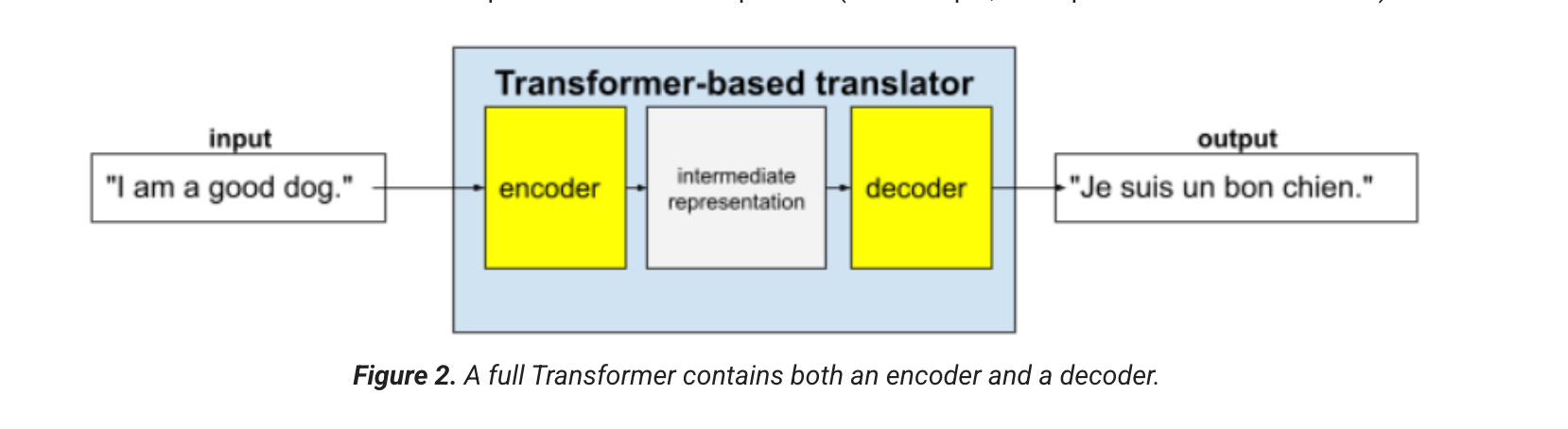

As these systems (and the systems built upon these systems) change and enhance, a lot of companies have changed their approach to how they incorporate a Transformer into their models.
ChatGPT, for example, is actually run off of Google’s Transformer (the name of which is spelled out as Chat Generative Pre-trained Transformer) but has never used the encoder part to keep more open-ended responses and conversation. As Google and Anthropic developed Gemini and Claude, respectively, they also moved to a more holistic approach, using decoder-only architecture for it to better compete with ChatGPT. But its more deep learning tools like T5, T5Gemma and Google Translate (which use a system called BERT) still use the encoder-decoder architecture.
🤓 To get really nerdy about Transformer and Google’s LLMs, check out their full documentation.
Why understanding LLMs matters to publishers
As noted above, Gemini’s systems run off LLMs and the Transformer architecture, scouring the internet for information and then weighing the relationships between words in a sentence to grasp context for the response.
All systems are used slightly differently, but follow the same foundational structure that is built from an LLM. That means understanding how Google — and other AI companies like OpenAI, Anthropic, Meta, etc. — are collecting and converting the information that they eventually serve to users as answers.
And with the evolution of AI Search, we are no longer only worried about text-based features. Other models built off LLMs also generate images, audio and video based on patterns recognized, too.
Knowing the mechanics behind LLMs can change how you interact with AI as an audience editor. It’s essential writers and editors know how and why AI responses are generated. Understanding LLMs also sharpens the level of analysis you can provide to the newsroom. Knowledge is power.
Understanding LLMs enables you to better spot hallucinations, be mindful about the information you share and know why certain patterns tend to appear regularly.
A final note: Transformer was first discussed in 2017, almost ten years ago. AI was already a thought back then, and as more people become curious about the technology, they have jumped on systems we’ve known about for a long time and enhanced their capabilities. We are just now seeing what this technology was truly capable of when they first started.
TL;DR: Quick debrief of the ‘pyramid of AI’
There were a lot of new terms discussed in this newsletter, and the way AI systems are run is very complex. Below is a list of queries we discussed, as well as a pyramid of the core engine all the way to the surface level integrated systems.
Transformer: The engine cylinders of the AI car, provides the architecture
LLM: Large language model, the raw engine power of the car (keeps it moving)
Agentic framework: The system controls for the car, being able to take action within boundaries
Search integration: Retrieving the external information needed for the user-facing prompt, like a live GPS knowing where to go
Gemini/Claude/AI Overviews: The car: the complete user-facing product ready to use
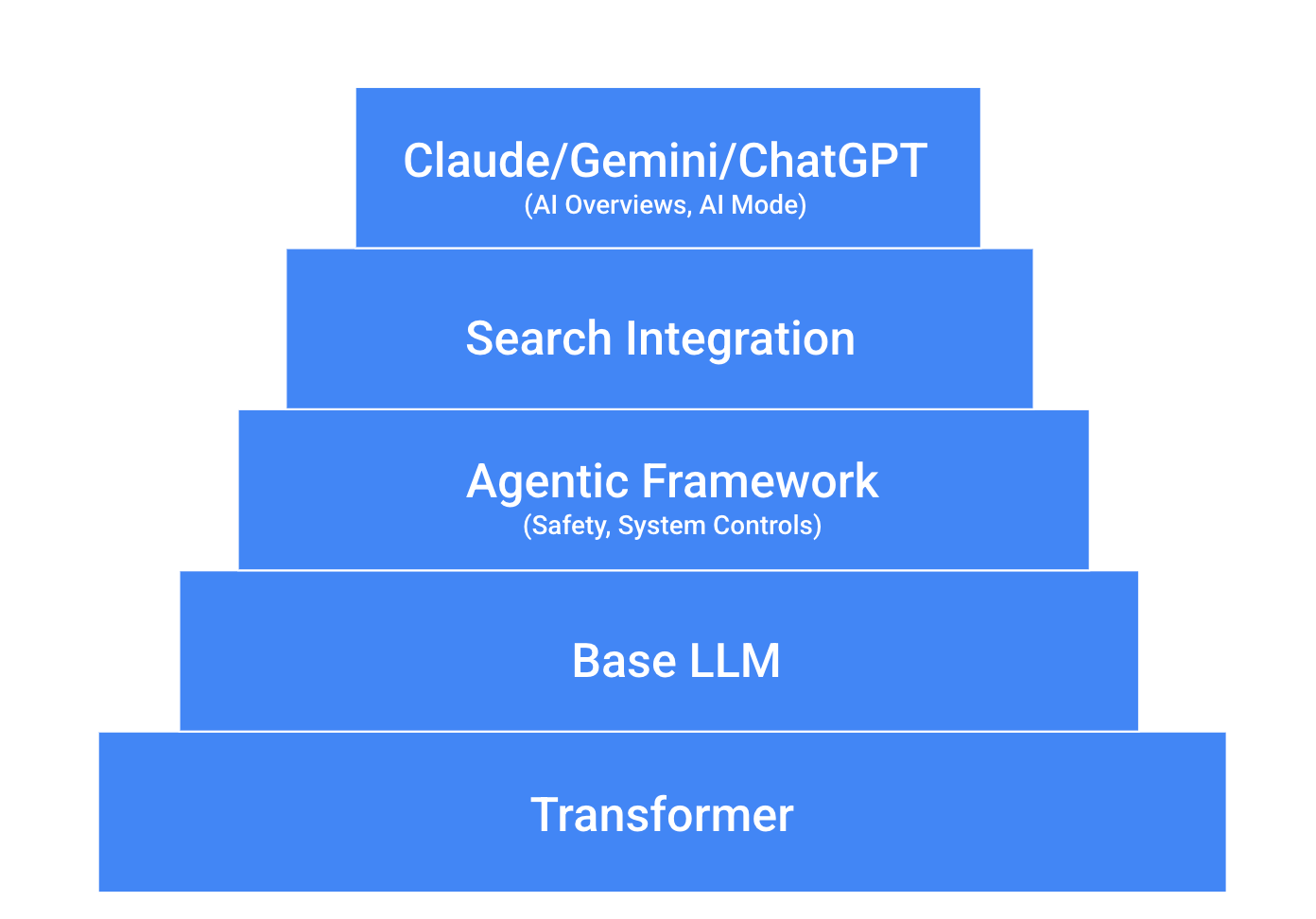
The bottom line: LLMs are just one part of the bigger ecosystem of artificial intelligence, but important for publishers to understand, as they are the engine of the Search car. Understanding the whole pyramid will level up your scope as an audience editor.
RECOMMENDED READING
Google news and updates
🤖 Danny Goodwin: Google loses key DMCA claims against SerpApi in scraping lawsuit.
🤖 Barry Schwartz: Google updates its optimize your crawl budget document.
🤖 Matt G. Southern: “Are You A Bot” Screens can get your pages dropped by Google.
Even more recommended reading
✂️ Alexandra Bruell: Google Search was a lifeline for publishers. Now they’re thinking of cutting it off.
🎉 Similarweb: The 2026 Generative AI landscape report.
💑 Madison Mills Yelp partners with ChatGPT to surface reviews.
📋 Daniel Foley Carter: SEO Ranking Factors for 2026: What you need to know.
✏️ Roxana Stingu: Crawl strategies, image optimization and internal search.
⚒️ Helen Pollitt: The biggest technical SEO time-wasters to avoid.
📲 Mikael Arajuo: The “TikTokification” of Search: Why the creator model is replacing the ranking model.
What did you think of this week’s newsletter?
(Click to leave feedback.)
Catch up: Last week’s newsletter


Have something you’d like us to discuss? Send us a note on LinkedIn (Jessie or Shelby) or email us (hello@seoforjournalism.com).
Written by Jessie Willms and Shelby Blackley