


Hello, and welcome back. Jessie and Shelby here, wondering where the heck March went. Shelby is currently in sunny St. Petersburg, Florida for a leadership program, but made sure to see the Toronto Blue Jays play their final spring training game in Dunedin. Bucket list item, check! Meanwhile, Jessie is back from a busy work trip to NYC (but don’t worry, I still made it to a slew of book and stationary stores, and spent $14 on three — yes three! — chocolate-covered dates). Time — and us, apparently! — never stops.
This week: A recap on Google news and updates, plus some of the (many) reports we’ve seen out in the world about the state of publisher traffic. There’s a lot swirling around right now. Let’s dive into some of it.
Next week: We will be in Chicago for the Online News Association conference! We are speaking on Monday about sustaining a side hustle! Send us a note if you want to grab a coffee! ☕
Let’s get it.
THE RECAP
Google runs experiment replacing news headlines with potentially AI-generated versions
What happened: Google confirmed it is testing replacing site-written headlines with AI-generated versions in organic Search results in blue links. Google spokespeople told The Verge this is part of a “narrow” test that is not yet approved for wider use. They said the goal is to identify content on a page that’s useful to readers and better match the query to the title. So far, it does not appear to be happening to Top Stories headlines.
In the example below, Google replaced the original headline (Oversensitive and overreactive: what is nervous system dysregulation and how can it be resolved?) with a truncated version (Nervous system dysregulation – Oversensitive and overactive).
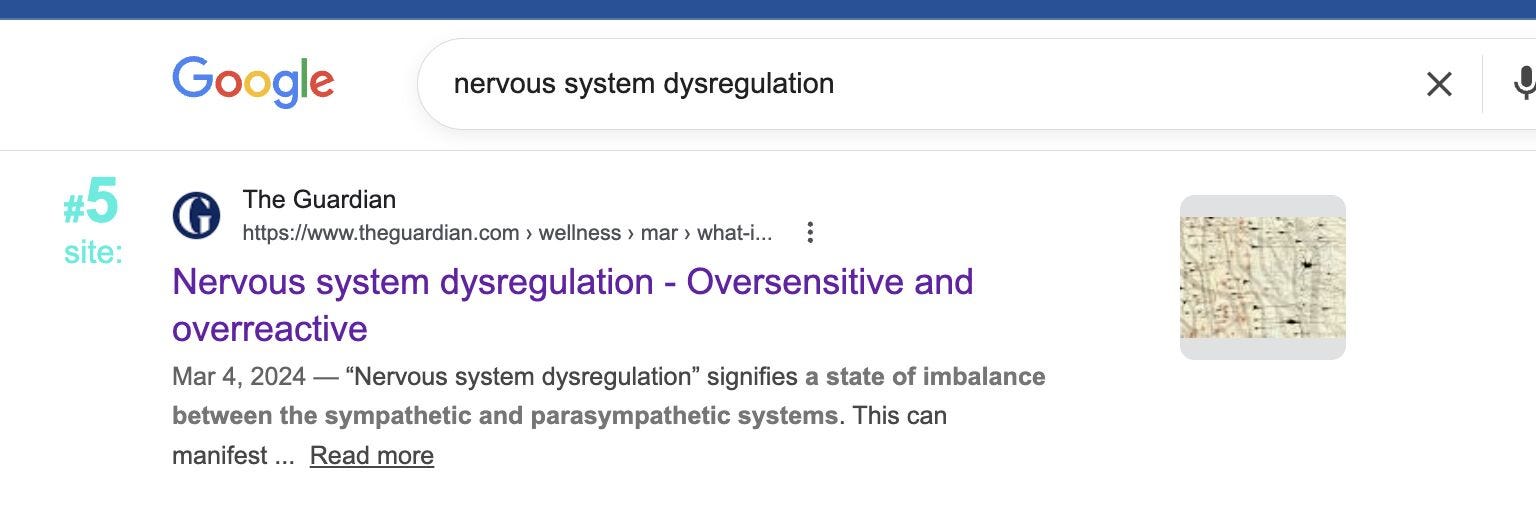
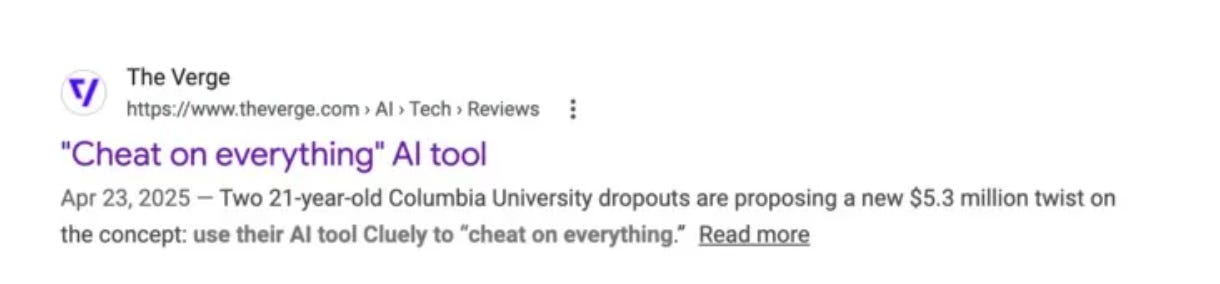
In the example below, Google replaced The Verge’s full headline (I used the ‘cheat on everything’ AI tool and it didn’t help me cheat on anything) with a 27-character version.
Why it matters: Google tweaking titles is not new. They’ve cut headlines based on pixel width in search results, or cut headlines at/before punctuation (like a colon) before.
However, these AI-generated headlines could undermine efforts by editors to write titles that are accurate, enticing and properly reflect the reporting. As Lousia Frahm wrote on LinkedIn, if a headline’s meaning or accuracy is changed, the “long-term audience trust will be compromised.”
Google showing AI Overviews for breaking news queries
What happened: Industry expert Glenn Gabe reported seeing AI Overviews surfacing for breaking news queries. It appears to be happening more frequently, even pushing the Top Stories box down on SERPs.
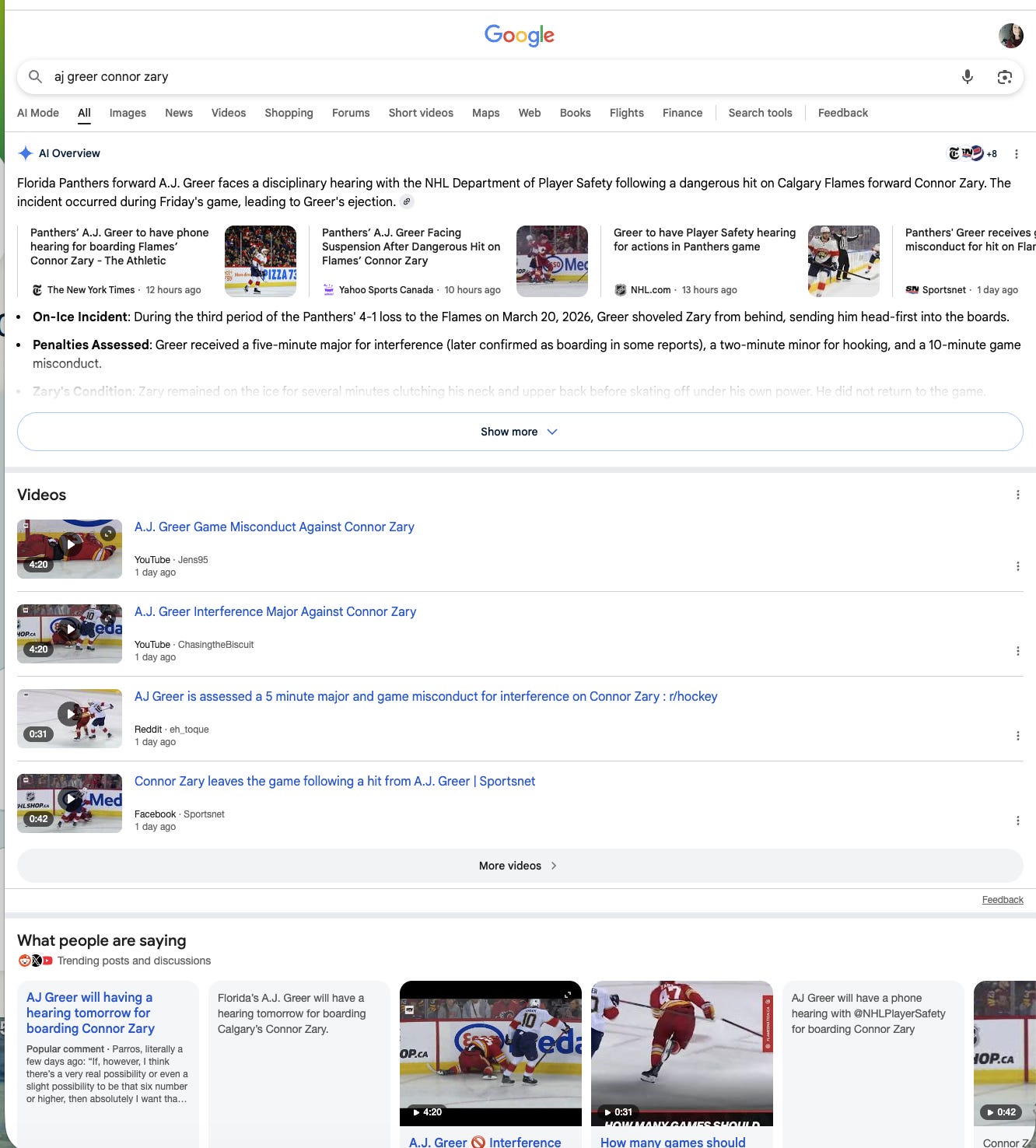
The good news: Publisher links are very prominent in the AI summary, unlike earlier examples that did not have any citations.
The bad news: As clear in this example, publisher visibility on Google Search is decreasing by the moment, and since AIOs negatively impact click-through-rates, publishers will see fewer visitors from the platform.
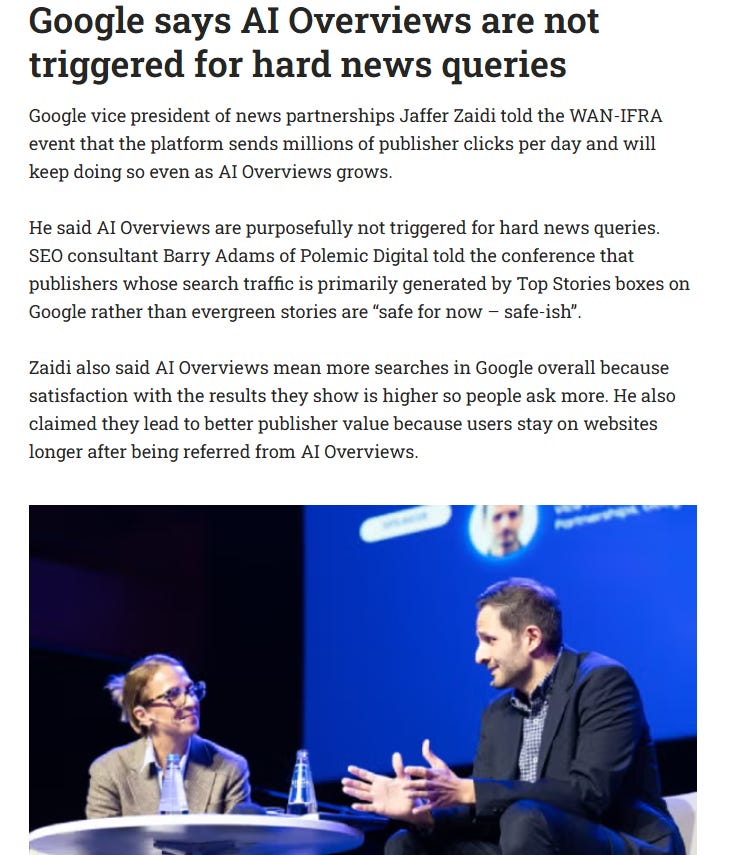
Why it matters: In May 2025, Google’s own vice-president of news partnerships, Jaffer Zaidi, said at the WAN-IFRA World News Media Congress that AI Overviews are “purposefully not triggered for hard news queries.”
This meant publishers were safeguarded — or “safe-ish,” as friend of the newsletter Barry Adams put it — from the invasion of AI summaries in news-based results. And even back in 2024, Google said there were “strong guardrails” in place for news and health topics, saying AIO summaries wouldn’t surface for those terms.
This is now clearly not the case.
Some “soft news” queries were already triggering AIOs at a high level — especially those around evergreen or long-term news events like the Ukraine war. The increase in AIOs for new breaking news terms is another threat to publisher traffic.
Search traffic is falling for some publishers, according to a Chartbeat study
What happened: Smaller publishers — those with less than 10,000 daily page views — are experiencing the biggest traffic declines in the era of AI, falling by as much as 60 per cent, a recent Chartbeat report found.
The study, which looked at broader trends with search, social and AI across 4,000+ sites, found a 6 per cent decline in 2025 from 2024 in the average number of weekly page views. (This is within the normal range for traffic fluctuation.)
Medium (10,000–100,000 daily page views) and large (more than 100,000 views) publishers have experienced traffic declines from traditional search engines at different rates.
Medium-sized sites fell 47 per cent, while large outlets fell 22 per cent. It’s likely this is due to higher direct traffic and brand awareness.
Why it matters: Publishers — especially small outlets — need to rely less on external platforms to deliver consistent traffic. Outlets need to build direct relationships with readers, prioritizing on-platform engagement.
Google responses to the CMA’s consultation on potential requirements for Search
What happened: In response to proposals put forward by the United Kingdom’s Competition and Markets Authority (CMA), Google said the company is working with the organization to ensure the Search requirements for the digital market rules promote “fairness and choice while protecting user experience.”
Google outlined three ways it can “best serve the British public”:
Keep Search results fair and useful: Google says it designed its ranking systems to show the most “relevant highest-quality results for your query,” and that some third-party proposals “could expose our systems, and thus our users, to manipulation and abuse.” Google says these proposals would make it harder to fight spam and slow down improvements.
Make it easy to choose your favourite services: Google says a frequent pop-up prompting users to choose their favourite search engine would be invasive. They propose a “less intrusive, permanent central switch” in the device’s settings.
Give publishers even greater control: Google maintains that “helping people web content remains central” to their approach. As a result, the company is developing further updates to the controls to let sites specifically opt-out of generative AI features in Search.
Why it matters: The requirements could set a precedent across the globe. Google is eager to get ahead of any impact on its market share, so indications that the company is willing to make adjustments to AI opt-out is extremely notable.
And while Google also said features like AI Overviews “make links to sources more prominent,” the user behaviour still does not encourage a click through to the publisher. These rules may impact how Google approaches links in AIOs.
Other Google news and updates
Mordy Oberstein: Google is testing a new “Google News Showcase” label in Discover. It’s similar to how Discover treats Twitter/X posts on the platform.
Matt G. Southern: Google is making AI Mode’s Personal Intelligence free for users in the United States.
#SPONSORED - The Classifieds

Get your company in front of almost 14,000 writers, editors and digital marketers working in news and publishing. Sponsor the WTF is SEO? newsletter!
THE JOBS LIST
Audience or SEO jobs in journalism. Want to include a position for promotion? Email us.
The Athletic is hiring a Director, Data and Analytics (Remote).
Indiegraf is hiring a Publisher Success and Enablement Lead (Remote, B.C.).
The New Yorker is hiring a Senior Director of Audience Development and Analytics. (New York, N.Y.).
Warner Bros. Discovery is hiring a Director of Business Development (New York, N.Y.).
Bloomberg is hiring a U.S. Audience Editor (New York, N.Y.).
Even more recommended reading
🤖 Mike Anderson: “We improved keyword rankings for our blog by 34 per cent in 3 weeks.”
🗞️Benjamin Mullin, Erik Wemple and Katie Robertson: How Jeff Bezos upended The Washington Post.
🧩 Madeleine White: Spektrum’s evolution of audience segmentation and testing.
🚦Danny Goodwin: Yahoo’s CEO says the biggest threat to web traffic is AI Mode.
📓 Crystal Carter: What is prompt tracking?
What did you think of this week’s newsletter?
(Click to leave feedback.)
Catch up: Last week’s newsletter


Have something you’d like us to discuss? Send us a note on Twitter (Jessie or Shelby) or to our email: seoforjournalism@gmail.com.
Written by Jessie Willms and Shelby Blackley