

BOOK THREE, GET ONE FREE!
Put your brand front & centre in WTF is SEO?
Want to get your product in front of thousands of sharp, growth-minded audience editors, media moguls and executive leaders in publishing?
We’re running an exclusive deal to make your advertising budget work double-time: Buy three title sponsorships in the newsletter and get the fourth completely FREE!
Title sponsorships give you prime newsletter real estate, custom copy tailored to our audience and direct access to an exclusive subscriber list who actually open, read and trust our advice.
Prime inventory like this doesn’t hang around for long. Claim your 4-for-3 sponsorship package today!
Email hello@seoforjournalism.com, subject line: “Book an ad.” Availability starting this August.

Hello, and welcome back. Jessie here, back from a weekend of softball (obviously), a long walk on Toronto Island and eating ice cream (again: obviously, it is summer).
This week: Google news and updates! We cover several interesting studies on zero-click searches, topic authority in artificial intelligence and reports on the “nuclear” option one publisher was looking at amid falling search traffic. Plus: updates from Google Search Console.
Let’s get it.
THE RECAP
Google makes social platform tracking available in GSC
What happened: Google launched platform properties in Search Console worldwide, a new way to track performance of social and video posts, and published a guide with tips on getting the most out of the data.
Platform properties allows publishers to connect their Instagram, TikTok, X or YouTube accounts and provides insights about the queries people use to discover their content. Publishers can track traffic trends (for example: if an older video suddenly pops off), identify top-performing content, see the search terms people use to find off-site social content, compare formats (for example: short vs. longform YouTube video) and more.
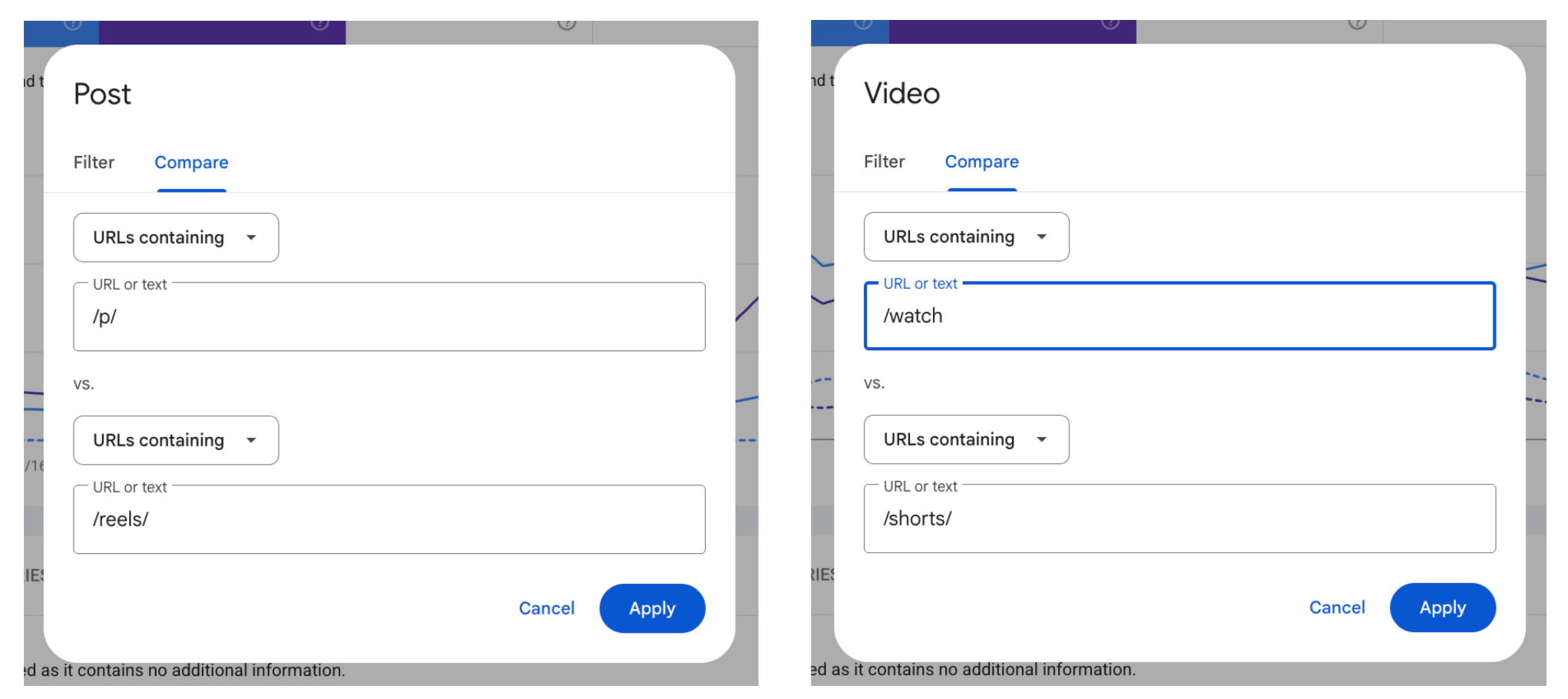
Why it matters: Google has been updating GSC recently, with a report that makes tracking impressions (but not clicks) available for generative AI features. The addition of social tracking gives publishers a much more holistic view of their brand’s visibility and performance on Search.
Still on our wishlist: a Top Stories filter and click data for AI features (and much more!).
Top Stories boxes appear in many AI Overview summaries for news queries
What happened: Top Stories boxes are now embedded in more than 15 per cent of Google’s AI Overview summaries for trending news queries in the United States. The feature was first spotted earlier this summer.
If Google returns an AI Overview for a news query, it can come as a text-only summary, with a separate Top Stories box further down the page.
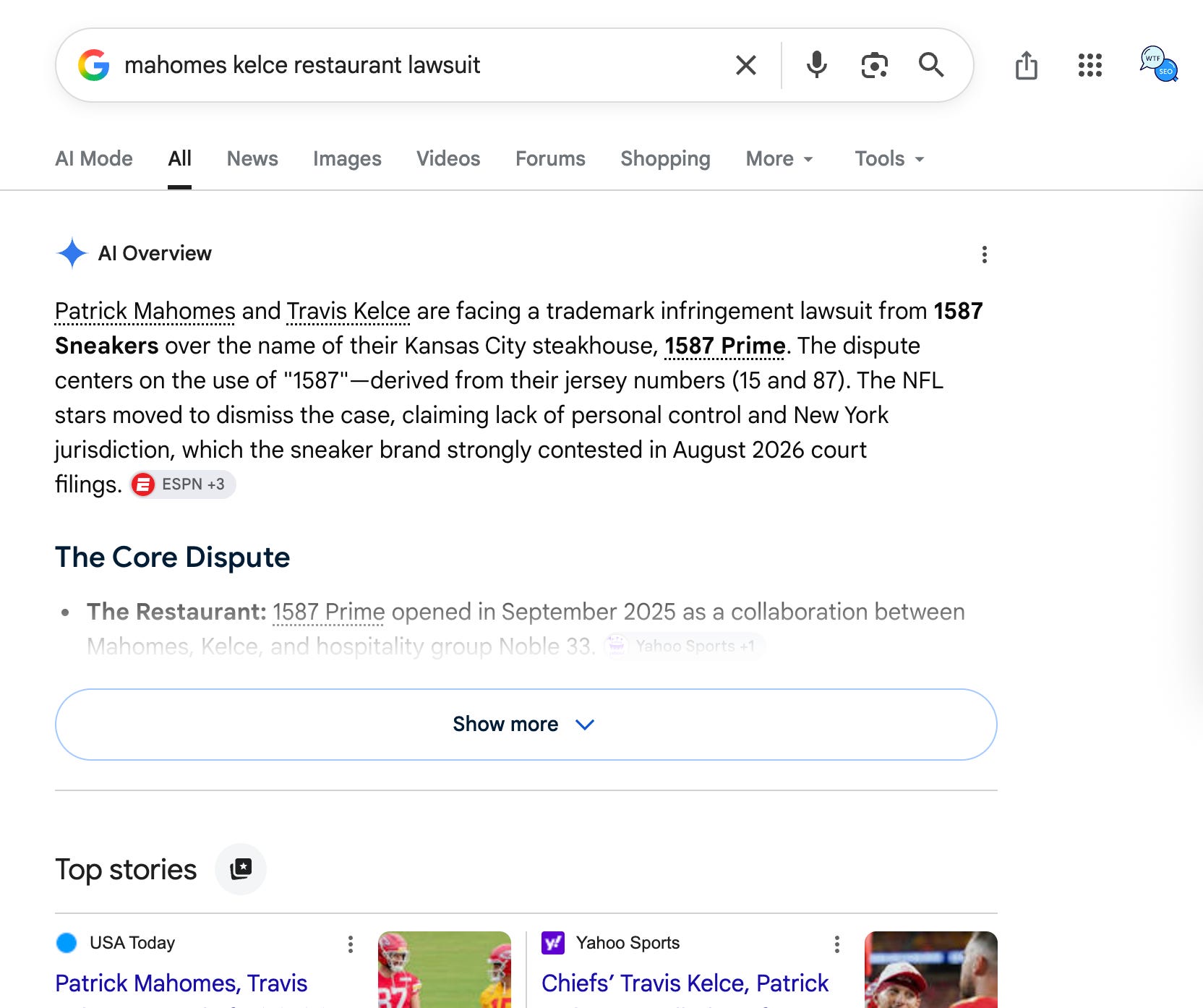
However, Google is now embedding Top Stories directly in the AI summary (and not surfacing a Top Stories box under the AIO).
While this could potentially lift click-through rates, there are also implications for publishers who are considering opting out of having their content and links available in AI Overviews or AI Mode. It could be that you lose all Top Stories placement opportunities by opting out of AI.
Why it matters: When Google first rolled out AIO in 2024, the company said it would aim to “not show AI Overviews for hard news topics, where freshness and factuality are important.” We’re long past that claim. Google is increasingly using AIOs to summarize breaking news.
Again, it’s possible Top Stories boxes in AIO will improve Google traffic for pages in the news box in the AI-generated summary. However, if Top Stories exclusively appears within AIOs, any publisher who opt out of AI inclusion is potentially opting out of these Top Stories, too. Tricky moves from Google.
Greg Jarboe covers more about the implications – and confusion — for publishers surrounding this and Google-Extended.
People is not blocking Google – despite threats
What happened: The CEO of People Inc. said it won’t block Google, after suggesting in an interview last month the option was “100% on the table.” Neil Vogel said the bold action of blocking Google’s search crawlers — and therefore its AI scrapers — is something the company won’t do for now, but is “constantly being looked at.” Traffic to People’s core 19 brands (which include sites like AllRecipes, Martha Stewart Living and Investopedia) has fallen roughly two-thirds from its peak.
Why it matters: Vogel said his overall objective is to secure a “fair economic deal” for People’s content, and that he would like to block Google’s AI Overviews and AI Mode — “just like we would to anybody else who doesn’t have a deal with us.” As AdWeek reported, this “nuclear option” was once considered “unthinkable” but is now being explored, at least in theory.
Zero click search: what kinds of sites see the biggest traffic decline?
What happened: iPullRank completed a study of zero-click behavior using Datos clickstream data for more than 13 billion searches. The study found nearly 47 per cent of searches end without a click. Further, while zero-click search is rising, it’s happening slowly: it increased about 2.6 percentage points from October 2024 through December 2025.
Zero-click behaviour varies widely, iPullRank reports. For example, Reddit and Github — forums where discussion is the objective — saw less erosion in their clicks, whereas Google increasingly answers queries that would previously result in traffic for informational sites such as Wikipedia and IMDb.
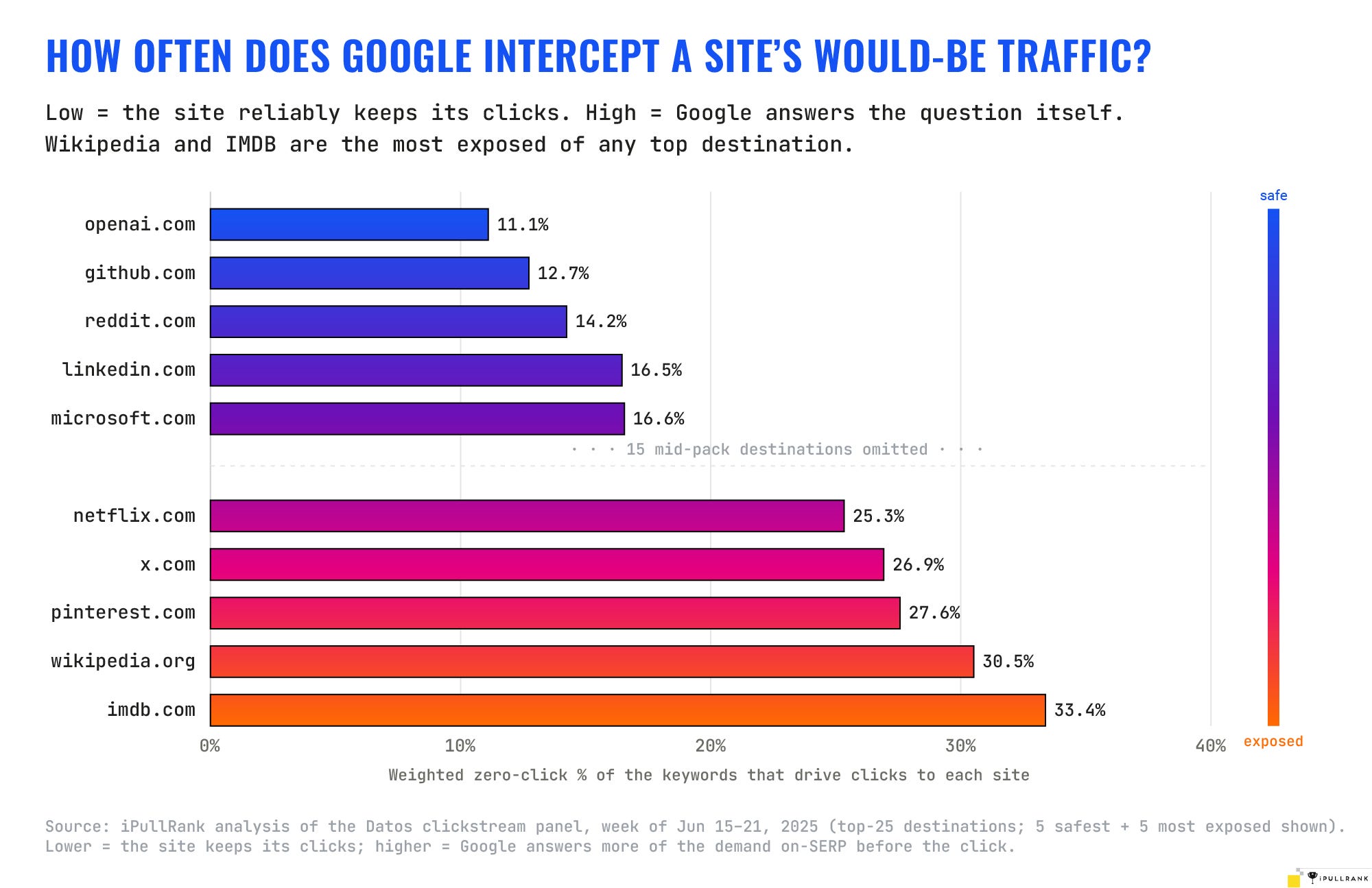
What it means: Search traffic for many sites is falling — and now getting a click from users is increasingly dependent on context. In some categories, brands are competing directly with Google’s answers, while in other verticals discussing a topic on a forum is the point of a search and therefore users will continue to click through (e.g. on Reddit). Simple queries about the time of a speech or sporting event can easily be answered by Google right in the results. This isn’t new, but does reinforce the need to think about what people really need and value from your brand – then overdeliver on that for your audience.
Topic authority and AI
What happened: Following his early deep dive into topic authority, growth advisor Kevin Indig’s latest research examines the following: once a brand has developed topic authority in a topic, does that authority extend into related categories? His analysis, based on Semrush data using the AI Visibility Toolkit, found it is possible for brands to earn citations outside their established areas of expertise.
“You can be a source on pretty much any topic if it matches the regular criteria for source citations. But the AI recommends you in core topics,” he reported. Further, once a brand owns a category, that expertise makes for an easier time expanding into related categories.
What it means: Publishing broadly — without establishing deep coverage — won’t result in direct AI recommendations or authoritative brand mentions. News sites can act as cited sources across various trending topics, but earning trusted mentions in Your Money or Your Life topics requires high E.E.A.T (Experience, Expertise, Authoritativeness, and Trustworthiness) consistent coverage. Expand into topics closely related to your core areas – don’t branch out willy-nilly.
THE JOBS LIST
Audience or SEO jobs in journalism. Want to include a position for promotion? Email us.
The New York Times is hiring an Editor, Audience — A.I. and Emerging Platforms (New York, NY).
CNN is hiring a Director, Product Management - AI Platforms (New York, NY).
EVEN MOORE RECOMMENDED READING
🔮 Harry Clarkson-Bennett: The future of discoverability.
🗞️ Hanaa’ Tameez: America’s largest newspaper chain, USA Today Co., partners with Palantir to analyze audience data as search traffic falls.
⚽ Jacob Granger: How the World Cup was really watched: Inside the data behind football’s biggest live blogs.
🖊️ Andrew Deck: A record-breaking eight Pulitzer awardees disclosed AI use this year.
🧑💻 Caroline Haskins: The hottest new AI chatbot? It’s just a guy answering your questions.
📋 Bahga El Sobky, Ihab Rizk: Microsoft added branded and non-branded AI queries in the clarity citations dashboard.
What did you think of this week’s newsletter?
(Click to leave feedback.)
Catch up: Last week’s newsletter


Have something you’d like us to discuss? Send us a note on LinkedIn (Jessie or Shelby) or email us (hello@seoforjournalism.com).
Written by Jessie Willms and Shelby Blackley