

Hello, and welcome back. Jessie and Shelby here, reporting from the Online News Association conference in beautiful, windy Chicago! We’re presenting our learnings on how to build a side hustle while having a 9-5 — without losing your mind (or personal life)!
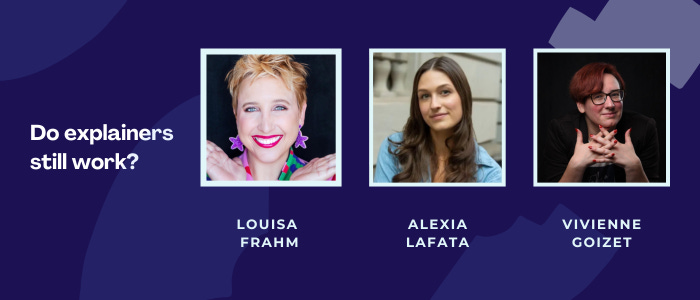
This week: Do explainers still work? With Google’s AI summaries taking up more of the search results page, answering top-of-the-funnel questions — and perhaps this prediction — we wanted to ask the experts: is there still value in journalism that answers the W5?
Our all-star panel (the best of the best!) includes Alexia LaFata, Senior SEO Manager with experience at New York Magazine, The Verge, Polygon and more; AI and News Discovery SEO Strategist Louisa Frahm, as well as Vivienne Goizet, Editorial SEO and AI Project Lead.
Let’s get it.
THE INTERVIEW
WTF is SEO?: Explain in your own words what an explainer is.
Alexia LaFata: An explainer is a piece of content that boils a topic down into the essentials and explains it for an audience. That’s my one sentence description. There is a lot more to say, but in one sentence that’s what I would say.
Louisa Frahm: I firmly believe that an explainer is a simple and straightforward piece of content that is objective in nature. It’s really trying to get to the heart of what you’re talking about without beating around the bush. You’re getting to the meat and potatoes right away and breaking it down into simple-to-understand terms that can appeal to a wide audience with a wide range of backgrounds.
Vivienne Goizet: It’s a longer content piece, like a glossary entry or something. It really explains a topic from a variety of angles, not just one perspective. It’s not just like an encyclopedia entry.

WTF is SEO?: With the changes that we’ve seen to Google lately — AI Mode, Google Zero, chatbots, etc. — do explainers still work for publishers?
Alexia LaFata: I think when you interrogate the word “work,” you can have different answers to this question. Do explainers “work” in the sense that you’re going to get the same amount of gangbusters search traffic you might have gotten from one piece a couple of years ago? I don’t think so. The search results landscape has changed so much. There are so many options for users to click that would satisfy their intent, and that one explainer may not be the thing they want.
But, do I think explainers are still really essential for the coverage of any news topic? Yes.
When you’re thinking about establishing your topical authority around a subject, and being present in all of the essential conversations for a topic, absolutely. I think it’s even more crucial now to write explainers that target those topics your audience trusts you with, so that you are showing up on those search results pages.
I think this is a moment for long-tail keywords as well. In the past, we used to be able to do one of those giant explainers that would cover every part of a topic. It was really broad for search intent. But now, honing in on exactly what your target audience is looking for via those long-tail keywords and writing explainers for them is so valuable, especially if you’re choosing topics that the Large Language Models (LLMs) haven’t had time to learn about yet. You’re getting in that space before it’s easily summarized or before the information disseminates throughout the internet.
These explainers also do well in Google Discover. I think publishers forget about Discover for explainers. So even more of a reason to target those really specific, unique long-tail queries is to have value in Discover.
I also think explainers are still essential for your brand. They’re essential for your link equity — how you’re able to link all the different pieces of content that you write around a topic. You need explainers to link. If you just cover a topic once, you won’t have that nice web of content to show Google and users that you actually do cover this topic comprehensively as part of your brand.
You definitely can’t not do explainers just because of the risks of AI. You still need to think about them in terms of your holistic news strategy.
Louisa Frahm: First off, I second everything Alexia said. I believe that explainers still have a place in this AI landscape that we’re in. I’m going to throw it out there because it’s always in the industry all the time: is SEO dead? We hear about this all the time. It’s like, “is SEO dead?”
I’m going to address it through the lens of explainers because while I firmly believe that SEO is not dead and we all still should have jobs, I do think that certain principles and practices that previously worked for SEO have started to fade away and aren’t as effective anymore.
One of those things is evergreen explainers that used to exist where it was “set it and forget it.” You create this explainer, it can just drive traffic without being frequently updated. That is fading into the past.
Explainers are absolutely still a necessity, but the way you treat them is changing with AI. If you want to improve your odds of appearing in those search features when people are searching during those newsy windows, you need to prioritize building the right content library, being very familiar with it and being very closely in tune with the news cycle of your brand.
You need to know when to go in and refresh those explainers, getting them back in front of readers at the right time. That way, you’re sending that freshness signal as well over to Google to improve your odds of appearing. I would stress that the updates process has been really critical.
Also, this AI era of search that we’re in, multimodal search is where it’s at, right? Search isn’t just defined by the first page of Google anymore. Search isn’t dead because people are still searching for things online, but the scope of it and where you reach your readers has really changed.
Performance isn’t only defined by, “how did you show up on the first page of Google?”
This can widely vary depending on what your brand is, but that could be things like your app, newsletters, social media channels and Reddit. Alexia brought up Google Discover. That’s another important place. The nature of getting the most out of your explainers is absolutely shifting, but the need for them has never gone away. It’s your surefire way to really elevate your E.E.A.T in a time when inaccuracies run amok. You really want to be presenting yourself as that legitimate resource to readers.
WTF is SEO?: Given this new era, what adjustments do publishers need to think about, consider and implement right now in order to make explainers still really work for them?
Vivienne Goizet: I strongly believe that we’re going from just publishing an article and people can consume it, to more how we allow people to interact with the article.
For example, if you have an article that explains what ETFs are, and you have answered all the questions, a person has more questions. Another article they want to read should be linked in it, or you have some form of chatbot that they can ask about the article. If you start implementing those now, and making it an experience, explainers will actually be able to drive more traffic. And, the traffic that comes from Google will be more valuable because people stay longer on the site. You have more engagement from the visitors.
Alexia LaFata: There are so many SEO best practices that folks should have been following that I think are just going to become even more essential now. For example, having an explainer that leverages subheads is going to be even more crucial, because already people are reading on their phones all the time. Sites need to be mobile first. It’s intimidating to read giant walls of text; you have to break it down for people to easily consume your content. And that is even more important for AI, so that AI can really understand what your content is about.
Framing content for the human reader is essential and will help get your SEO suggestions across to editors as well. Speaking as a former editor, I understand the value of really centring that searcher, that reader, in SEO recommendations. And the humans in this AI era are crucial, too, because humans are still searching.
I also think freshness is key for maintaining trust. Louisa mentioned this, but setting it and forgetting never really worked. Depending on the topic, you always needed to keep an eye on the competitive landscape for whatever keyword you were targeting and make sure that you were staying relevant in search results. But now, due to even more competition, you need to illustrate you’re really up to date on your news topic more frequently. Having a dashboard to keep track of all those pages is essential.
Topical authority is also still important. Having a hub page, a landing category page that surfaces all your different kinds of content about the topic you’re covering, including the explainer, is even more essential. If the goal of explainers now is to illustrate that topical authority, you really need to illustrate it across the board and for your whole brand.
Finally, Vivienne touched on this too, but having something else for people to do on the page is key. I do think qualified user stats about how people use AI search are real. I have found that people are extremely qualified when they come from these chatbot interfaces and AI search. So, can you give somebody something else to do when they land on the explainer? Is there a newsletter they can sign up for? Is there a subscription they can explore and sign up for?
Whatever the extra step is, this is key to do because that will give you an extra KPI. This era of news journalism is so dependent on ad revenue. And we did volume for the sake of volume. I think we need to alter our definition of success in many ways with SEO. Having that extra step, that extra KPI, helps all of us continue to illustrate the value of SEO.
Louisa Frahm: I totally agree with all of it. Off what Alexia was just saying, the way that we define how this type of content performs is really shifting.
I think we need to be reshaping what defines success. Even if you are making it into those modules, the click-through rate isn’t there. Trust and having brand visibility are an increasingly important metric; just overall brand visibility in different channels. And that relates back to multimodal search, how you need to be anywhere and everywhere that your readers are consuming content.
I’ve been trying to provide positive case studies to my stakeholders showing trends and that we are providing that information to readers in the windows when they need it is extremely important.
We have to consistently think about shaping that conversation correctly to minimize panic and make it clear that this is still helping our brand and elevating our brand. This is also hopefully encouraging long-term loyalty with our readers. Because that’s what we want — repeat visitors, people coming to us directly.
That loops in another evolution of search in this mix: personalization. That’s becoming a bigger thing in search. Now, we have preferred sources in Top Stories. If you are that source in AI Overviews and maybe popping up more in Top Stories, people may select you as a Preferred Source. That’s only going to help you more.
And finally, we all have to be in the same sandbox. For a long time, SEOs in newsrooms were kind of like in our own sandbox and [other teams are] in their own sandbox over there. They are like, maybe we’ll come in and play with you, but we really have our own thing over here. But that’s not optimal anymore. You have to all be in the same sandbox and you have to all be playing together.
I’ll say it again: multimodal search is mixed up in everything. When you look at a search results page now, it could be Reddit, it could be YouTube, it could be anything.
I would really stress to anyone in a newsroom, if you’re still getting that pushback for separation, we have to really be vigilant about making it clear this is no longer optional. For our survival as brands, we need to be interconnected. That collaboration element is essential. You need to be on the same page and be employing strategies that complement each other.
WTF is SEO?: How do you think publishers should think about explainers? And in 2026, what makes a good explainer?
Alexia LaFata: Consider that long-tail keyword pool as the first step in making a good explainer. Make sure you’re really targeting the topics that your audience would know you for. That will increase your chances of getting clicks and engagement on those stories. And Discover is key, because usually those long-tail searches are a little more interesting, a little more detailed and they’re going to be surfaced to folks that have those interests in their Discover feed.
Leverage subheaders. Use opportunities to break up big pieces of text whenever you can.
We talked a lot about multimodal search, too. If there is an opportunity to create a video component for an explainer, that’s great. Videos can be more valuable for certain kinds of content in the news space. Depending on the explainer, if there’s a chance to create something fresh that could be surfaced across another channel — social media, YouTube, whatever it is — that’s only going to add to your potential to surface in search results. You’re killing two birds with one stone there. So, find opportunities to rework content for another channel.
Finally, understand that the value that explainers have has changed, and that’s okay. It doesn’t mean they’re less valuable. It just means we have to think about them differently. We have to not put all of our eggs in our explainers. We have to treat them as part of the overall ecosystem of how we’re covering a story, as opposed to the thing in isolation that is going to save our SEO strategy. That has changed, and the landscape is going to continue to shift and change.
Vivienne Goizet: I love what you said about the overall ecosystem because I think that is the way to go. We are talking so much about what will save us from AI. It will be that you have an established brand. We are all working for amazing brands, but when it comes to explainers, we have to think, what does my brand really stand for? What are we the topic authority on? And then make explainers that cover everything about it so people and Google and the whole internet knows we are the authority on the matter.
Louisa Frahm: You have to prioritize your audience. Like, this era is scary. There’s a lot of uncertainty. But if you prioritize the needs of your audience and you get to know them on a deep level and you’re really in tune with them within the particular news cycle of the beats that you cover, that’s what makes a good explainer. That gives it its evergreen appeal. It’s something they can search for at any time. A topic that kind of resonates across the board, but then when breaking news hits, it can be quickly refreshed and become even more important.
I’ve just seen time and time again that those end up being the most successful: where it was very well done on an evergreen basis, where it could have appeal throughout an entire season, but then when there is breaking news, it can be refreshed and show that in-house expertise.
And again, back to multimodal. I love what was previously said about hitting every single channel, like creating different versions of it. We just have to think bigger and better. We have to think that much bigger as SEOs.
We’re not just SEO people anymore. We’re audience people now. And I think that’s the name of the game.
#SPONSORED - The Classifieds

Get your company in front of almost 14,000 writers, editors and digital marketers working in news and publishing. Sponsor the WTF is SEO? newsletter!
THE JOBS LIST
Audience or SEO jobs in journalism. Want to include a position for promotion? Email us.
The Forward is hiring a Deputy Director of Audience (New York, N.Y., hybrid)
The Forward is hiring a Social Video Producer (New York, N.Y., hybrid).
Citycast is hiring an Audience Development Manager (Salt Lake City, U.T., hybrid).
The Telegraph is hiring a Head of Community (London, U.K.).
RECOMMENDED READING
Google news and updates
🤖 Google: The March 2026 spam update was completed on March 25.
🤖 Barry Schwartz: Google March 2026 core update rolling out now.
🤖 Google: Find out what’s new in the Gemini app in March’s Gemini Drop.
🤖 Google: Search Live is expanding to all language and locations where AI Mode is available.
🤖 Barry Schwartz: Google has added a new user-agent called Google-Agent.
Even more recommended reading
🎉 Nieman Lab: Young people want their news to be more fun, a new report says.
⌨️ Rand Fishkin: Influence happens everywhere, according to an analysis of the 5,000 most-visited sites.
🍺 SEO and Beers Podcast (Barry Adams & Steve Wilson-Beales): How The Times maintains trust and SEO success with Luke Halls
🖱️ Cyrus Shepard: How Google click signals drive SEO rankings and AI answers.
📊 John Shehata: Data shows a huge gap in how often AI Overviews appear by news section.
📉 Barry Schwartz: Report shows AIOs show less often for breaking news.
💡 Chris Long: SEOs need to know about the most recent update to ChatGPTs (hint: it looks at more trust signals).
What did you think of this week’s newsletter?
(Click to leave feedback.)
Catch up: Last week’s newsletter


Have something you’d like us to discuss? Send us a note on Twitter (Jessie or Shelby) or to our email: seoforjournalism@gmail.com.
Written by Jessie Willms and Shelby Blackley